Currency Market News
Pound Sterling: "May is Unlikely to be Forgiving" says BofA
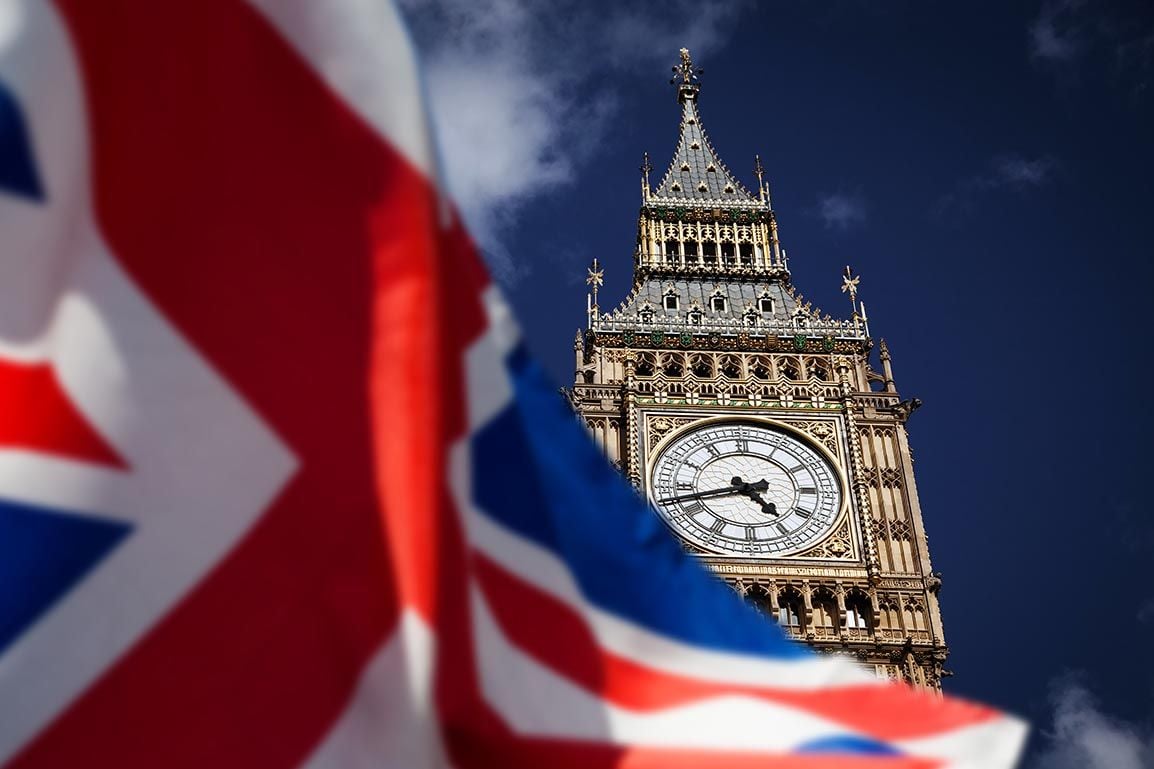
April was a good month for the pound, but buckle up for May, warn currency analysts. Image © Adobe Images April was a good month for the pound, but buckle up for May, warn currency analysts. The British pound strengthened through April, and history says that's not random: seasonality has a very powerful hold on the pound at this time of the year. Pound sterling regularly and dependably rallies against most peers due to seasonal factors in April: Kamal Sharma, FX Strategist at Bank of America, says this is because a significant number of UK-listed companies that earn overseas repatriate revenues to pay GBP dividends at this time of the year. That creates real non-speculative demand for pound sterling. Other drivers played their part too: Risk sentiment improved as traders saw the worst of the Middle East conflict pass by. Domestic economic data has surprised for the better, which boosted UK interest rates relative to elsewhere. In fact, in the G10 complex, Britain's economic pulse surprised to the upside by more than any other country. "This combination in April - lower market volatility and widening spread has helped the dividend flow story," says Sharma. Compare Currency Exchange Rates Find out how much you could save on your international transfer Amount From GBPUSDEUR To EURUSDGBP Estimated saving compared to high street banks: £2,500.00 Compare Rates from Leading Providers → Free • No obligation • Takes 2 minutes (function() { var amountInput = document.getElementById('cw1n-amount'); var savingDisplay = document.getElementById('cw1n-saving'); function updateSaving() { var amount = parseFloat(amountInput.value) || 0; var saving = (amount * 0.025).toFixed(2); savingDisplay.textContent = '£' + saving; } if (amountInput) { amountInput.addEventListener('input', updateSaving); } })(); The flip side is that seasonality doesn't have a strong pull in April alone, as May is also a dependable month. However, it tends to be a month of decline for the pound: BofA data shows that over a 15-year spell, the pound has tended to lose approximately one per cent of its value against the dollar in May. Against the euro, there's a smaller loss on the ledger, and it's only against the Australian and New Zealand dollar that the pound tends to advance. "Sterling rallies are selling opportunity before 7th May local elections and bearish seasonality next month," says a weekly strategy note from Société Générale. BofA's Sharma explains May is historically bad for GBP, particularly versus USD, as volatility tends to rise (which also explains why the pound ekes out gains against the high-beat Australian and New Zealand dollars). This year will see May bring additional risks: local and devolved government elections and the resultant political noise pose risks. "An election drubbing for Labour could bring down the premiership of Keir Starmer," says Société Générale. Starmer's Labour Party is expected to lose heavily in Scotland, Wales and across England's councils. With the PM already under pressure over the Mandelson affair, talk of his replacement will likely grow in the weeks following the vote. "The risk of a leadership change in Downing Street is growing. Markets are wary that a new prime minister – and, by extension, chancellor – might mean more borrowing and looser fiscal rules," says James Smith, Developed Markets Economist at ING Bank. Former Deputy Prime Minister Angela Rayner is considered the favourite to replace Starmer in the event he is ousted. She represents a more socialist Labour politics, which will be potentially detrimental for the country's finances. "May is unlikely to be forgiving," says Sharma. "With a little over one week to go, markets appear to have taken a relaxed view to the May local elections. We see some value in owning some optionality ahead of the event on the likelihood that political noise will intensify in the days following the results."
Pound Risks Weakness as Bank of England Tipped to Reject Rate Hike Bets
Traders think interest rate rises are unavoidable, but expect the Bank of England to push back. Image © Adobe Images Traders think interest rate rises are unavoidable, but expect the Bank of England to push back. The Bank of England is expected to leave interest rates unchanged next week and fight market bets for at least two hikes before the end of the year. Such a challenge would mean next Thursday presents 'dovish' risks for the British pound. "Financial markets are once again pricing upwards of two Bank of England rate hikes this year. Governor Andrew Bailey won't like that," says James Smith, Developed Markets Economist at ING Bank. The pound has firmed against the euro over the past week as a set of above-consensus economic data prints crystallise expectations that the next interest rate moves from the Bank will be up. UK CPI inflation rose to 3.2% y/y in March, according to data released earlier this week, while services inflation, considered a truer gauge of domestic inflation dynamics, unexpectedly rose 4.5% against a consensus estimate for 4.3%. "The UK MPC will remain divided on the challenges of inflation persistence, which the last inflation report will not have helped with given the quickening of services prices," says a note from Lloyds Bank out this Friday. UK bond yields have risen in response to these figures, which means monetary conditions in the UK have naturally tightened, without the Bank having to do anything. And with oil and gas prices settling, albeit at high levels, some at the Bank of England might be inclined to push back more actively against rate hikes. "After last month’s surprising show of unity, we expect the old divisions among committee members to come back to the fore. Though the framing has naturally shifted from “cut or hold” to “hold or hike”, we’d expect the prior doves to place more emphasis on the differences with 2022 at this meeting than they did at the last," says Smith. Compare Currency Exchange Rates Find out how much you could save on your international transfer Amount From GBPUSDEUR To EURUSDGBP Estimated saving compared to high street banks: £2,500.00 Compare Rates from Leading Providers → Free • No obligation • Takes 2 minutes (function() { var amountInput = document.getElementById('cw1n-amount'); var savingDisplay = document.getElementById('cw1n-saving'); function updateSaving() { var amount = parseFloat(amountInput.value) || 0; var saving = (amount * 0.025).toFixed(2); savingDisplay.textContent = '£' + saving; } if (amountInput) { amountInput.addEventListener('input', updateSaving); } })(); ING says it doesn't think the Bank will hike rates this year and rates will stay at 3.75% for the rest of 2026. If correct, that means market implied rate expectations can correct lower by at least 50 basis points. The rule of thumb is that this, in isolation, would weigh on the pound. If that repricing starts next Thursday, the pound could give up some of its recent gains against the euro and extend a budding downtrend against the dollar. Bear in mind, however, that Thursday also sees the European Central Bank make its decision, ensuring we can look forward to a day with many moving parts that will offer up some volatility in GBP/EUR. "The tone at the ECB is likely to be more cautious, with the Governing Council set to repeat it willingness to tighten policy as needed," says Lloyds Bank. If the outcome is a 'hawkish' read on the ECB and a 'dovish' read on the Bank of England, then we're looking at a classic divergence in favour of the euro.
Pound Sterling Faces Big Losses Against Euro and Dollar, Warns Desjardins
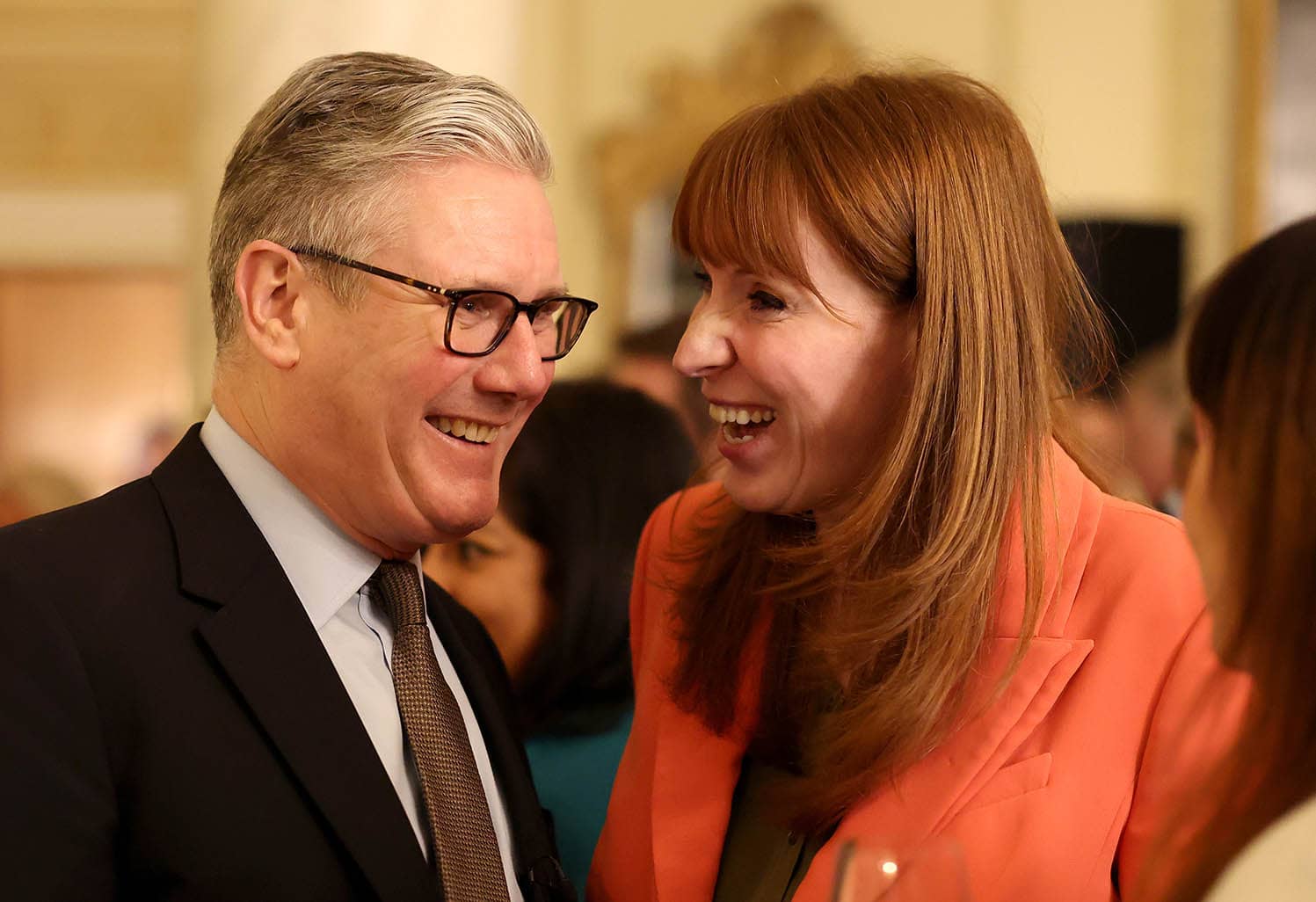
Canadian investment bank Desjardins has a warning for those counting on a stronger pound: don't bet on it. File image of Starmer and Rayner. Picture by Lauren Hurley / No 10 Downing Street. Canadian investment bank Desjardins has a warning for those counting on a stronger pound: don't bet on it. The bank has released its latest forecast update and confirms it holds a prediction for significant pound sterling weakness over the coming months. "Overall, we remain bearish on the GBP against both the USD and EUR," it says. The following factors are cited for the bearish GBP stance: Politics The May local elections are widely considered a risky moment for Prime Minister Keir Starmer who is expected to see his Labour Party lose significant ground. "The ruling Labour party is poised for heavy losses in nationwide local elections on May 7, which we expect will trigger a leadership challenge against Prime Minister Keir Starmer. While there could be several contenders, the most likely candidates to replace the PM would be either Angela Rayner or Wes Streeting," says Desjardins. Compare Currency Exchange Rates Find out how much you could save on your international transfer Amount From GBPUSDEUR To EURUSDGBP Estimated saving compared to high street banks: £2,500.00 Compare Rates from Leading Providers → Free • No obligation • Takes 2 minutes (function() { var amountInput = document.getElementById('cw1n-amount'); var savingDisplay = document.getElementById('cw1n-saving'); function updateSaving() { var amount = parseFloat(amountInput.value) || 0; var saving = (amount * 0.025).toFixed(2); savingDisplay.textContent = '£' + saving; } if (amountInput) { amountInput.addEventListener('input', updateSaving); } })(); Analysts explain Rayner would start off with a credibility deficit due to her prominent role in forcing the government to U-turn on plans for fiscal consolidation. "Meanwhile Streeting would be seen as the continuity candidate. Put simply, the leadership change is unlikely to result in a significant improvement in fiscal governance or jump start stalled tax and entitlement reforms," says the research note. Debt Dynamics and Faltering Growth Public sector borrowing data released Thursday showed the government borrowed more than expected in March, supporting another rise in UK bond yields (i.e. the cost of government borrowing). They are already elevated compared to those of similar economies and concerns about the trajectory of the country's finances are a perennial headwind for the pound. "The spread between 10‑year gilt and US Treasury yields remains close to 60bps, the widest in 25 years, reflecting some of these concerns," says Desjardins. 🎯 GBP/EUR Q2 Forecast Data: Consensus targets from our survey of tier-1 investment bank projections. 📩 Request your copy. Domestic growth is also expected to be challenging for the British pound, with the IMF recently lowering UK growth projections by the largest margin among developed nations from 1.3% to just 0.8%. "The multilateral institution echoed our concerns about faltering nominal growth, rising public debt and eroding institutional credibility," says Desjardins. Bank of England Becomes a Headwind To be sure, the pound-euro exchange rate has risen this week on the back of some consensus-beating economic data releases, which all point to a limited chance that the Bank of England lowers interest rates. That firming in rate expectations tends to support sterling. However, Desjardins "are not sure whether the market would reward the pound if the Bank hiked rates due to surging energy prices, or whether it would punish it for potentially pushing the UK over the fiscal cliff." Desjardins maintains a 2026 forecast for the GBP to fall to 1.30 vs USD and to 0.92 vs EUR. That's a pound-to-euro target at 1.0870. That's well below the consensus of investment bank forecasts as per our Q2 poll of tier-1 investment bank forecasts and sends a warning of significant potential downside risks.
Pound Sterling in Solid Gain Against Euro As Inflation Jumps

UK services inflation beat expectations in March, according to new figures released by the ONS. Image © Adobe Images Pound sterling advances against the euro, helped by inflation that's just hot enough to cause too much concern. The pound-euro exchange rate extends to 1.1530 and takes its daily gain to a quarter of a per cent as London markets close for the day, making this the strongest level for euro buyers since the end of March, Gains follow news that UK inflation rose to 3.3% in March, as the war in Iran was felt at Britain's fuel stations. That figure met inflation, meaning it hit a sweet spot for the pound: inflation is hot enough to prevent the Bank of England from cutting rates, but not hot enough to signal an ugly period of stagflation is looming. Services CPI rose 4.5% versus 4.3% expected in March, up from 4.3% in February: "The main point of concern will be that services inflation, which is stickier by nature and thus more of a headache for policymakers, rose 0.2ppts to 4.5% y/y," says Sam Hill, Head of Market Insights at LLoyds Bank. The data will therefore prevent the Bank of England from cutting rates next week and, if anything, increases the prospect of an interest rate rise later in the year. That's reflected in a tick higher in UK bond yields, which is on balance supportive of pound sterling and helps GBP/EUR exit the very static range of the past three weeks. (By the way, our Q2 GBP/EUR consensus forecasts are out now, offering a solid anchor point for those with upcoming transfers, more info here). "The Bank of England will stay put when it meets next week. Markets are interested in reaction functions from the ECB and the BoE to help decide on the faith of EUR/GBP," says a note from KBC Bank in Brussels. Compare Currency Exchange Rates Find out how much you could save on your international transfer Amount From GBPUSDEUR To EURUSDGBP Estimated saving compared to high street banks: £2,500.00 Compare Rates from Leading Providers → Free • No obligation • Takes 2 minutes (function() { var amountInput = document.getElementById('cw1n-amount'); var savingDisplay = document.getElementById('cw1n-saving'); function updateSaving() { var amount = parseFloat(amountInput.value) || 0; var saving = (amount * 0.025).toFixed(2); savingDisplay.textContent = '£' + saving; } if (amountInput) { amountInput.addEventListener('input', updateSaving); } })(); Services PMI is arguably the most important figure in today's data batch because it is of particular relevance to the Bank of England. The Bank knows an inflationary spike will follow the Iran War, which has sent oil and gas prices soaring. But there's little it can do about that. Instead, it's services and core inflation that will matter for the Bank of England; these are the elements of inflation that are determined by the domestic economy, and changing interest rates can have an impact. Above: Stubborn services CPI limits headline CPI's ability to fall to the 2.0% target. That services inflation was hotter than expected will be of concern and will warn the Bank that domestic prices could follow energy prices higher in the coming months. That raises the risks of another embedded inflationary surge. To be sure, core CPI edged lower to 3.1% from 3.2%, which was softer than consensus estimates for 3.2%. Bottom line, though, is that these figures are all far too high for the Bank to consider cutting interest rates, particularly given the recent above-consensus GDP and labour market prints. For the pound, today's numbers are ultimately supportive inasmuch as they suggest UK rates will remain higher for longer. Above: The UK has elevated inflation relative to comparable economies. This implies the Bank of England can't cut faster than peers, and that should ultimately prove supportive for GBP.
Pound Sterling Squares Losses On Cautious Hope for Ceasefire Extension
Tensions on the rise again in the Middle East, putting pound sterling on the backfoot this Monday. Image © Adobe Stock Pound sterling started the day lower against the dollar and euro but pared those losses as investors bet the U.S. and Iran would muddle their way to a ceasefire extension. It was a nervy start to proceedings Monday, with investors digesting overnight news that the U.S. had seized an Iranian cargo ship. Iran threatened to pull out of scheduled talks with the U.S. as a result. Nevertheless, as we approach the close of play the U.S. confirms its team is still en route to Pakistan, and Iran hasn't backed up its claims it won't attend. Having dipped in early trade, GBP/EUR and GBP/USD recover to flat as investors hold onto hope that at the very least the ceasefire will be extended beyond Tuesday's cutoff. "On FX markets, the dollar failed to extend/hold gains at the open this morning," says an evening note from KBC Bank in Brussels. "The US currency apparently ‘needs’ higher risk-aversion and/or higher oil prices to really regain momentum." Compare Currency Exchange Rates Find out how much you could save on your international transfer Amount From GBPUSDEUR To EURUSDGBP Estimated saving compared to high street banks: £2,500.00 Compare Rates from Leading Providers → Free • No obligation • Takes 2 minutes (function() { var amountInput = document.getElementById('cw1n-amount'); var savingDisplay = document.getElementById('cw1n-saving'); function updateSaving() { var amount = parseFloat(amountInput.value) || 0; var saving = (amount * 0.025).toFixed(2); savingDisplay.textContent = '£' + saving; } if (amountInput) { amountInput.addEventListener('input', updateSaving); } })(); On Friday we signed off with the good news that Iran had agreed to open the Strait of Hormuz, reporting that the pound was trading higher against the dollar and euro as a result. But when we walked into the new trading week, we were met with a notable deterioration in the Middle East, as the Strait remained closed and Iran said it was unlikely to engage the U.S. in a second round of negotiations. The leading headline was the U.S. had seized an Iranian-flagged tanker in the Strait after it failed to adhere to a U.S. blockade. Iran had a day earlier fired on an assortment of cargo carriers and threatened that round two of talks was a no go. U.S. President Trump, in turn, rattled his sabre on his favourite social media channel: "We’re offering a very fair and reasonable DEAL, and I hope they take it because, if they don’t, the United States is going to knock out every single Power Plant, and every single Bridge, in Iran. NO MORE MR. NICE GUY!" Hallmarks of escalation were evident in GBP rates on Monday: Pound-dollar gapped lower to 1.3490, having been as high as 1.36 on Friday. It's back to 1.3526 at the time of this article's update. Pound-euro fell to 1.1473, but is back at 1.1485. Further losses for the pound against the euro and dollar are likely in the coming days if the situation escalates. However, the market response to this deterioration was relatively minor and certainly betrays ongoing market optimism over the matter. "Any wobble could be short-lived and an opportunity to re-establish dollar shorts," says a weekly FX note from Barclays. Insane footage of a US 🇺🇸 Navy destroyer, USS Spruance, firing into a cargo ship’s engine room off the coast of Iran after repeated warnings to turn back pic.twitter.com/6mlm5wJEs6 — Ukraine Battle Map (@ukraine_map) April 19, 2026 Above: Footage of U.S. Navy destroyer USS Spruance, firing into the Iranian ship's engine room. The ship was captured. Given the perennial hope in markets, we would anticipate GBP/EUR and GBP/USD downside to be relatively contained and for both pairs to advance if and when the U.S. and Iran get back to the negotiating table. Domestically, this week will also see some political considerations as the UK Prime Minister will account for himself in Parliament on Monday over the Mandelson affair. We reported last week that the British pound's outlook dimmed as a new political flare-up raises the odds that Starmer will be replaced by a fiscally incontinent left-winger. On Tuesday, Sir Oliver Robbins will give his account to MPs on how the appointment of Mandelson as U.S. ambassador played out, which should offer further intrigue. However, despite the piqued interest in UK politics it looks as though Starmer will survive this Mandelson episode as there are no challengers waiting to take the top job and we suspect that's wise: there's an inflationary and cost of living crisis coming down the line. They are better served waiting. .hzn-fx-wrap { --navy: #192e43; --navy2: #1f3650; --gold: #e2ce98; --gold-lt:#eddfa8; --border: rgba(226,206,152,0.22); --green: #4caf7d; --muted: #9ab0c4; font-family: Arial, Helvetica, sans-serif; -webkit-font-smoothing: antialiased; background: var(--navy); border: 1px solid var(--border); border-radius: 14px; overflow: hidden; width: 100%; box-shadow: 0 8px 32px rgba(0,0,0,0.22); } /* gold top accent */ .hzn-fx-wrap::before { content: ''; display: block; height: 3px; background: linear-gradient(90deg, transparent, var(--gold) 30%, var(--gold) 70%, transparent); } /* ── Header ──────────────────────────────────────────── */ .hzn-fx-head { padding: 20px 20px 16px; } .hzn-fx-eyebrow { font-size: 12px; font-weight: 700; letter-spacing: 0.15em; text-transform: uppercase; color: var(--gold); margin-bottom: 8px; } .hzn-fx-title { font-size: 22px; font-weight: 700; color: #ffffff; line-height: 1.2; margin: 0; letter-spacing: -0.02em; } /* ── Options ─────────────────────────────────────────── */ .hzn-fx-options { display: flex; flex-direction: column; gap: 8px; padding: 0 20px 16px; } .hzn-fx-option { background: var(--navy2); border: 1px solid var(--border); border-radius: 9px; padding: 14px; display: flex; align-items: flex-start; gap: 12px; } .hzn-fx-icon { font-size: 20px; flex-shrink: 0; line-height: 1; margin-top: 1px; } .hzn-fx-label { font-size: 16px; font-weight: 700; color: #ffffff; margin-bottom: 4px; } .hzn-fx-desc { font-size: 14px; font-weight: 400; color: var(--muted); line-height: 1.5; } /* ── Divider ─────────────────────────────────────────── */ .hzn-fx-divider { height: 1px; background: var(--border); margin: 0 20px 16px; } /* ── Body copy ───────────────────────────────────────── */ .hzn-fx-body { padding: 0 20px 16px; font-size: 16px; font-weight: 700; color: rgba(255,255,255,0.9); line-height: 1.6; } /* ── CTA ─────────────────────────────────────────────── */ .hzn-fx-cta { display: flex; align-items: center; justify-content: center; margin: 0 20px 20px; text-align: center; background: var(--gold); color: var(--navy); font-family: Arial, Helvetica, sans-serif; font-size: 15px; font-weight: 700; letter-spacing: 0.05em; text-transform: uppercase; text-decoration: none; padding: 16px; border-radius: 8px; min-height: 52px; box-sizing: border-box; transition: background 0.2s; } .hzn-fx-cta:hover { background: var(--gold-lt); text-decoration: none; color: var(--navy); } /* ── Footer ──────────────────────────────────────────── */ .hzn-fx-foot { background: var(--navy2); border-top: 1px solid var(--border); padding: 12px 20px; display: flex; align-items: center; gap: 8px; } .hzn-fx-foot-dot { width: 7px; height: 7px; border-radius: 50%; background: var(--green); box-shadow: 0 0 6px var(--green); flex-shrink: 0; } .hzn-fx-foot-text { font-size: 13px; font-weight: 400; color: var(--muted); } /* ── Desktop: constrain width in sidebar context ─────── */ @media (min-width: 600px) { .hzn-fx-wrap { max-width: 400px; } .hzn-fx-title { font-size: 24px; } } Horizon Currency Don't let the rate decide.You decide. 🎯 Rate Orders Set a target rate. We execute automatically the moment the market hits it. 🔒 Forward Contracts Lock in today's exchange rate for a transfer up to 12 months ahead. Removes rate risk entirely. 📲 Rate Alerts Get notified by WhatsApp or phone the moment the market reaches your level. Exchange rates move constantly, often in response to events outside your control. You don't have to wait and hope. Horizon gives you the tools to act on your terms. Take Control Now → FCA-regulated Payment Corridors · 0% fees · Industry Beating Exchange Rates
Pound Sterling Risks Build As Starmer Accused of Misleading Parliament
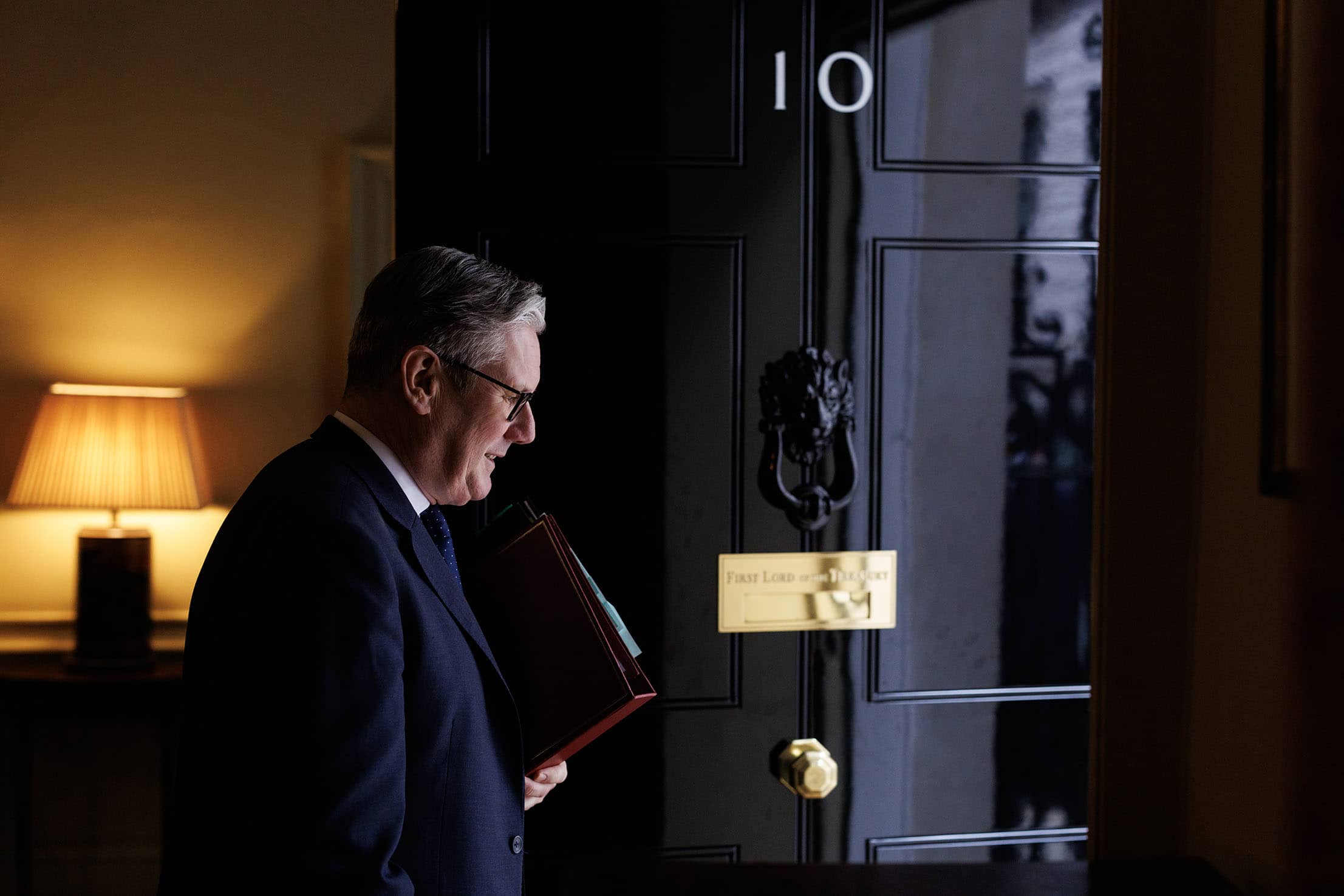
Allegations of misleading the House come just weeks before ground-moving local elections. Picture by Simon Dawson / No 10 Downing Street Allegations of misleading the House come just weeks before ground-moving local elections. The British pound's outlook has dimmed owing to fresh pressure on Prime Minister Keir Starmer as it is claimed he misled the House of Commons in detailing his appointment of Peter Mandelson as U.S. Ambassador. The prospect of the pound being plagued by political uncertainty has risen after it was revealed Thursday that Mandelson had failed an internal security vetting process ahead of the appointment owing to his ties to Jeffrey Epstein. Starmer previously told parliament that "due process" was followed, and overnight his office said he had no knowledge of the security vetting failure. However, opposition parties and political commentators say this is vanishingly unlikely and that he misled Parliament. The Conservatives, Lib Dems, Greens and Reform have called for his resignation. "GBP only lost modest ground versus USD following another flare-up of the Mandelson scandal facing the government. That move has not been reversed overnight," says a daily note from Lloyds Bank. The Prime Minister's latest crisis comes just three weeks before local and devolved elections that are expected to see his Labour Party virtually wiped out. Internal party pressure is expected to build, and challengers are rumoured to be manoeuvring for Starmer's ouster. "Risks remain skewed to the downside into the May elections," says a recent note covering the pound's outlook from Barclays. Compare Currency Exchange Rates Find out how much you could save on your international transfer Amount From GBPUSDEUR To EURUSDGBP Estimated saving compared to high street banks: £2,500.00 Compare Rates from Leading Providers → Free • No obligation • Takes 2 minutes (function() { var amountInput = document.getElementById('cw1n-amount'); var savingDisplay = document.getElementById('cw1n-saving'); function updateSaving() { var amount = parseFloat(amountInput.value) || 0; var saving = (amount * 0.025).toFixed(2); savingDisplay.textContent = '£' + saving; } if (amountInput) { amountInput.addEventListener('input', updateSaving); } })(); The coming hours and days should see pressure on the PM build, and markets will be tuned into the drama. "News that Olly Robbins, the head civil servant at the Foreign Office, has been dismissed signals the government see blame laying with officials rather than ministers or Starmer. Nevertheless, prediction markets (Kalshi) now imply a 56% chance Starmer is not PM by the end of the year, up from 47% before yesterday’s news," says Lloyds. The problem for financial markets is that the new replacement will likely be a left-leaning candidate with inclinations to boost spending at a time when the government's finances are already under pressure. UK bond yields are the highest amongst G7 peers, confirming markets are already demanding a premium to hold onto UK debt. The premium was first established when former Prime Minister Liz Truss tried to launch her infamous mini budget that threatened to topple the country's finances. That premium hasn't gone away and we've reported a number of subsequent episodes where the pound sells off alongside British bonds due to fears that the country's debt dynamics will worsen. The odds of it happening again are high. "Risks of a more expansionary fiscal policy have likely risen in the wake of the energy shock and with the upcoming May local elections," says Barclays. Above: Labour will be wiped out in Wales according to predictions by an extensive MRP poll. According to a recent MRP poll, Labour could suffer its worst night in local election history, winning just 42 authorities, down from 83. MRPs are considered the most accurate in the polling industry because they consider local-level voting intentions. Analysts at Barclays say they now pencil in a modest re-widening of the GBP's fiscal premium in Q2, closer to levels prevailing in November. The bank's new forecasts reflect this with a 1.1360 target "before a gradual normalisation towards the middle of the post-EU referendum range further out." The May polls were receding as a risk to the pound ahead of Starmer's latest Mandelson crisis, as it was reported by the Guardian that potential challengers were backing off to allow the PM to navigate the Middle East war. Polymarket has cut the probability that Mr Starmer will leave office by year-end from over 70% in early March to just 56%. A recent note from HSBC said this meant "for GBP, UK policy uncertainty remains under wraps, at least for now." We would expect those Polymarket odds to rise in the coming days, and in due course, political risk premium could start to reflect more meaningfully in sterling.
Pound Sterling Powers to pre-War Levels

Easy wins for the GBP/USD, but the GBP/EUR outlook is murkier. Image © Adobe Images Easy wins for the GBP/USD as the dollar declines, but the GBP/EUR outlook is murkier. The British pound is now at stronger levels against the dollar than it was before the outbreak of the war in the Middle East. In fact, the Middle East conflict 'premium' is no longer evident in the main GBP pairs, with GBP/USD on Tuesday rising to its highest level since February 26, an exchange rate last touched before the outbreak of war in the Middle East. GBP/USD recorded its sixth consecutive daily gain on Monday and rose to 1.3508, making for a bottom-to-top move of nearly one per cent, a sizeable recovery for a pair that started the week deep in the red on fears the U.S. blockade of the Strait of Hormuz represented a negative development. The rise in spot takes competitive 0%-fee transfer provider rates to 1.3470 while high street bank transfer rates are in the region of 1.3157. Above: GBP/USD at daily intervals. "GBP/USD extended its recent gains," says Sarah Hammoud, an analyst at Commonwealth Bank. "Risk sentiment improved thanks to optimism that an easing conflict in the Middle East will lower oil prices and support global economic growth. Iran and the U.S. reportedly may revive talks following the start of the U.S. blockade of the Strait of Hormuz." Markets reacted negatively to weekend news the U.S. would blockade the Strait of Hormuz, but it became clear the decision would not alter the calculus on non-existent outflows of oil and gas from the region, and that the move was a ploy to pressure Iran at the negotiating table. GBP/EUR has also shorn its war premium, but unfortunately for euro buyers, this reset takes it lower, and the pair trades at 1.1480. The current FX market action shows that U.S. dollar weakness is flattering the pound via the GBP/USD channel, and GBP/EUR is - as always - the better indicator of sterling-specific sentiment. This means as long as markets feel the war in the Middle East is muddling in a messy fashion towards a conclusion, risks to global growth should be contained, which limits demand for the safe-haven dollar. Above: GBP/EUR at daily intervals. It also means investors can return focus to domestic issues facing the pound: namely, a difficult economic backdrop and looming local elections where the incumbent Labour Party faces a drubbing. (Learn about protecting your GBP transfer into May's elections). "The recent resilience of GBP, supported by a sharp move higher in UK yields, is also unlikely to last. We already see scope for catch‑up GBP weakness to better reflect the negative energy price shock hitting the UK economy," says a monthly FX update from MUFG Bank Ltd. The pound rallied against the euro in the opening two weeks of the Middle East conflict because of fears rising oil prices would boost inflation to higher levels in the UK than elsewhere, partly because Britain entered the war with a higher baseline inflation rate. That would mean the Bank of England would need to raise interest rates, an assessment that boosted local bond yields. But as markets see the heat come out of the Middle East, there's scope for the market to reverse previous interest rate hike bets, prompting British bond yields and the pound to retreat against the euro and other non-USD G10 currencies. However, analysts at JP Morgan warn of another interpretation: that the UK is still particularly exposed to higher prices and a slowing economy. "For GBP... with the severity of the energy shock worsening and pushing the UK further towards stagflation, the pound won’t be our top pick for the asset re-allocation/sell-America trade, and instead we favour EURGBP longs to position for weakening fundamentals and more reactive FX hedging from European Real Money," says a daily note from JP Morgan's London trading desk. .hzn-con-wrap { --navy: #192e43; --navy2: #1f3650; --gold: #e2ce98; --gold-lt:#eddfa8; --border: rgba(226,206,152,0.22); --green: #4caf7d; --muted: #9ab0c4; font-family: Arial, Helvetica, sans-serif; -webkit-font-smoothing: antialiased; background: var(--navy); border: 1px solid var(--border); border-radius: 14px; overflow: hidden; width: 100%; box-shadow: 0 8px 32px rgba(0,0,0,0.22); } /* gold top accent */ .hzn-con-wrap::before { content: ''; display: block; height: 3px; background: linear-gradient(90deg, transparent, var(--gold) 30%, var(--gold) 70%, transparent); } /* ── Image ───────────────────────────────────────────── */ .hzn-con-img { width: 100%; aspect-ratio: 16 / 9; overflow: hidden; display: block; } .hzn-con-img img { width: 100%; height: 100%; object-fit: cover; display: block; } /* ── Body ────────────────────────────────────────────── */ .hzn-con-body { padding: 20px; position: relative; } /* ── Eyebrow ─────────────────────────────────────────── */ .hzn-con-eyebrow { font-size: 12px; font-weight: 700; letter-spacing: 0.15em; text-transform: uppercase; color: var(--gold); margin-bottom: 8px; } /* ── Heading ─────────────────────────────────────────── */ .hzn-con-heading { font-size: 22px; font-weight: 700; line-height: 1.2; color: #ffffff; margin: 0 0 14px; letter-spacing: -0.02em; } /* ── Body copy ───────────────────────────────────────── */ .hzn-con-desc { font-size: 16px; font-weight: 700; line-height: 1.6; color: rgba(255,255,255,0.9); margin: 0 0 20px; } /* ── CTA ─────────────────────────────────────────────── */ .hzn-con-cta { display: block; width: 100%; text-align: center; background: var(--gold); color: var(--navy); font-family: Arial, Helvetica, sans-serif; font-size: 15px; font-weight: 700; letter-spacing: 0.05em; text-transform: uppercase; text-decoration: none; padding: 16px; border-radius: 8px; box-sizing: border-box; min-height: 52px; display: flex; align-items: center; justify-content: center; transition: background 0.2s; } .hzn-con-cta:hover { background: var(--gold-lt); text-decoration: none; color: var(--navy); } /* ── Trust strip ─────────────────────────────────────── */ .hzn-con-trust { display: flex; align-items: center; gap: 8px; margin-top: 14px; } .hzn-con-dot { width: 7px; height: 7px; border-radius: 50%; background: var(--green); box-shadow: 0 0 6px var(--green); flex-shrink: 0; } .hzn-con-trust-text { font-size: 13px; font-weight: 400; color: var(--muted); } /* ── Desktop: constrain width in sidebar context ─────── */ @media (min-width: 600px) { .hzn-con-wrap { max-width: 400px; } .hzn-con-heading { font-size: 24px; } } Horizon Currency Concierge Money Transfers For high-value transfers, you need high-value service: dedicated account management, on-point pricing, insight into market conditions and trends, help with structuring your payment, and execution support at key moments. Learn More → FCA-regulated Payment Corridors · 0% Fees · One-to-one Support Strategists at CIBC Capital Markets warned on Monday that the pound will likely struggle as recent developments highlight the vulnerability of Britain's strained government finances. "Given the UK’s susceptibility to fiscal pressures and or its high beta status we can expect Sterling to remain on the defensive including versus the EUR. Given UK risk sensitivity we would expect EUR/GBP to drive higher towards the 1 April high at 0.8742, says CIBC analyst Jeremy Stretch. EUR/GBP at 0.8742 equates to a GBP/EUR conversion of 1.1440.
Pound Sterling Holds Shaky Ceasefire Gains
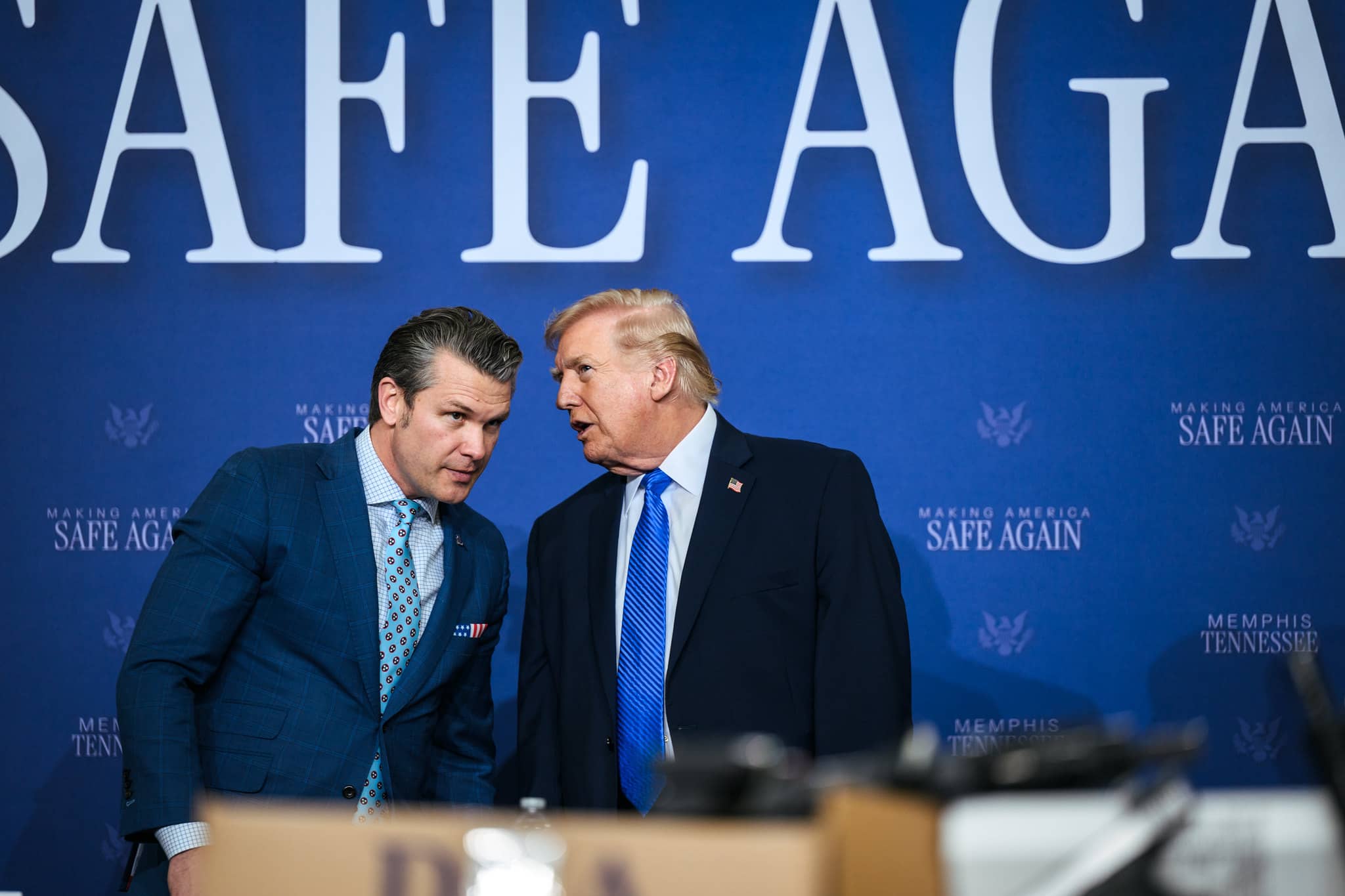
The British pound is rising against the euro and dollar after the U.S. and Iran agree to strike a two-week ceasefire. Secretary of War Hegseth and President Trump. Image: United States government work. The British pound holds advances made against the euro and dollar in response to news the U.S. and Iran agreed to strike a two-week ceasefire. U.S. President Donald Trump says a two-week ceasefire between the U.S. and Iran will come into effect if shipping is allowed to move through the Strait of Hormuz. Iranian Foreign Minister Abbas Araghchi says Tehran will agree to the end in fighting "if attacks against Iran are halted". Iran allowed tankers through the Strait of Hormuz earlier Wednesday, but as the day wore on, markets showed some nerves as it became apparent that hostilities were continuing. "It is a good sign to see markets holding onto their gains despite some reports of violation of the ceasefire with Israel continuing to bombard Lebanon which, in turn, has trigged Iran to stop the passage of oil tankers via Hormuz strait according to some reports," says Fawad Razaqzada, an analyst at Forex.com. For markets, that a ceasefire emerged at all is a best-case outcome as it means a significant escalation was avoided; Trump had said he would bomb Iran "back into the stone age" if his 1 AM BST deadline for Tehran to yield was not met. With a two-week ceasefire in prospect, oil prices fell, the dollar dropped, and stocks rose. Pound sterling benefited via improved investor sentiment: the pound-dollar conversion trades a per cent higher at 1.3430, pound-euro trades higher by a quarter of a per cent at 1.1490. By the London close, sterling was seen off its highs and those with impending transfers should consider benchmarking their bank transfer costs against more competitive provider channels: our co-branded GBP/EUR tool is here and GBP/USD tool is here. Above: GBP/EUR rises on improved global sentiment. Another welcome development for markets is that they've avoided a situation where Trump pushes back his Tuesday night deadline on the pretext that there was some progress, ultimately ensuring the status quo of recent weeks continues. Under such a scenario, markets would have muddled along, which for sterling sellers, meant a grind lower in valuations. TheBreakthrough This deal is the result of diplomatic efforts that were ultimately screened by Trump's total annihilation rhetoric. By Monday night Pakistani mediators had U.S. approval for an updated proposal for a two-week ceasefire, Axios reports, and according to the report it was up to Iran's new supreme leader, Mojtaba Khamenei, to decide. Apparently he's been active in negotiations for two days: the involvement of the new supreme leader was clandestine and laborious, and facing an active threat of assassination by Israel, Khamenei has been communicating primarily via runners passing notes. Axios cites two sources who said Khamenei giving the negotiators his blessing to cut a deal was the breakthrough. Without his green light, there wouldn't have been a deal, the regional source said. The pound tends to benefit when the mood music improves, and falling oil and gas prices will surely aid the domestic economy. De-escalation allows market participants to row back on bets that the Bank of England will respond to rising inflation risks with interest rate hikes. "Pricing in of rate hikes went too far in the escalation phase of the conflict, so some continued reversion back lower in expectations seems warranted on news of the ceasefire," says a daily note from Lloyds Bank. Above: GBP/USD jumps. That's welcome news for borrowers, but for the pound, the risks are murkier: often when that happens, pound sterling can come under pressure. So that's something we'll be watching for in the coming days. For now, the relief rally is in charge, and that's taking the local unit up a notch. Above: Brent crude prices plummet. Despite the helpful headlines midweek, market analysts at Lloyds Bank say there are expected to be lasting financial market impacts. "Even if shipping resumes through the Strait of Hormuz, with damage sustained to some regional energy infrastructure, supply constraints could be an issue for some time," says Lloyds in a morning briefing. Looking at the UK natural gas price outlook, futures data shows elevated levels can be expected for almost a year. That locks in higher inflation baselines for months to come. How the pound responds will depend on whether that higher inflation baseline threatens the UK economy and government finances. If the situation is uncomfortable but ultimately navigatable, sterling would benefit from higher bond yields. If government finances are compromised, a bond market rout becomes a real prospect, and that's a worst-case scenario for the pound.
The Pound's Path Splits 3 Ways on Crucial Hormuz Deadline

We grade the most and least likely outcomes and the FX market reactions. Image © Adobe Stock We grade the most and least likely outcomes and the FX market reactions. Markets are nervous as a major moment in the Iran war nears. 1:00 AM BST is the deadline for Iran to reopen the Strait of Hormuz. Trump woke up Tuesday and said on social media, "a whole civilisation will die tonight" if Iran doesn't open the Strait of Hormuz, which Iran has effectively blockaded. "We will find out tonight, one of the most important moments in the long and complex history of the World," he added. Iran thus far gives no indication it will comply. We see three scenarios and foreign exchange market outcomes: 1) Escalation: The U.S. proceeds with a massive escalation in its military campaign against Iran, this sends oil and the dollar sharply higher. GBP/USD responds by falling below 1.3160 and EUR/USD goes to 1.1450 in relatively short order. GBP/EUR should be more insulated, but will likely deflate further in sympathy with recent trends. With GBP facing a range of potential outcomes, some may prefer to plan rather than predict, using expert guidance to structure their transfer across different scenarios: explore how to manage your currency transfer with specialist support. "The ultimatum introduces a rare, time-bound geopolitical trigger with immediate global market implications. Markets are behaving as if this is background noise. A fixed, public deadline from the US president creates a binary outcome within hours," says Nigel Green, CEO of deVere Group. With downside risks in play, delaying a transfer can lead to a weaker outcome, meaning securing a rate earlier can help protect the value of your international payments. 2) Iran caves: Here Iran agrees to the U.S. terms and there's a rapid de-escalation that sends oil prices plummeting. GBP/USD and EUR/USD rebound strongly. Again GBP/EUR proves a harder read, but we suspect global 'risk-on' sentiment would help it rise. But, this is the least likely scenario as Iran simply hasn't given an inch since the conflict started. 3) Status quo continues. This is the most likely scenario. Does Trump really want to end Iranian civilisation? We strongly doubt it. Precedent suggests he is not keen on attacks on civilian and Iran's energy infrastructure. Precedent also shows "Trump always chickens out" in what's known as the TACO trade. A classic TACO would involve Trump pulling back at the last minute, saying Iran has agreed to talk or has made some advancement towards the U.S. position, allowing him to push the deadline back. Here, the recent trends in FX markets continue: USD and CAD drift higher against all, GBP extends gains against AUD and NZD. GBP/EUR extends lower, but not by much. "I have no idea what to do today. The market is obviously showing extreme complacency but that’s understandable. We have seen the “escalate to deescalate” movie so many times it’s moved from comedy to irony to tragedy. So I plan to sit this one out and wait for clarity on what is going on," says Brent Donnelly, strategist at Spectra Markets. Those with GBP payments should talk to their dealer to explore orders. If you don't have a dealer, enquire with a reputable provider today to see how much currency you could secure now, rather than leaving the outcome exposed to further market swings.
Pound's Rate Hike Support Dented by Bank of England Intervention
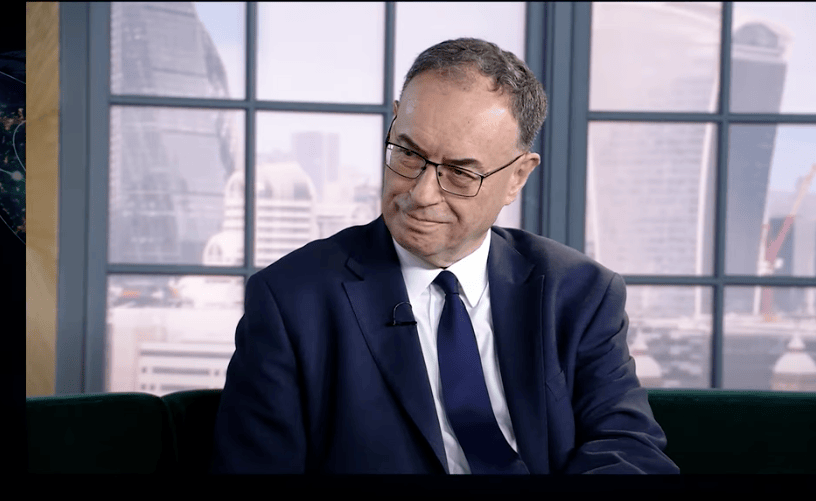
The Bank of England Governor says market expectations have gone too far. Still of Andrew Bailey. File image. Source: FT.com. The British pound's rate hike support was undermined by Bank of England Governor Andrew Bailey's most recent intervention. Bailey made it clear that the market was out of line in expecting as many as three interest rate rises in the coming months in response to the Middle East war. The Bank of England governor acknowledged the war will raise inflation, but he's clearly concerned that expectations have run ahead of the reality that is the Bank's own thinking on the matter. This amounts to an intervention by the Governor to cool the rise in market-determined interest rates. He said in an interview midweek that market participants were "getting ahead of themselves" by aggressively pricing in rate hikes. These market expectations are incredibly important as they drive real movements in forward-looking money markets, influencing mortgage and savings rates, and the pound. That forward-looking pricing showed investors saw as many as three rate hikes in 2026 at one point in late March, whereas the expectation at the start of the month was for two cuts. Above: Market expectations for the outlook for interest rates have risen sharply. It's a hefty shift that led mortgage providers to jack up interest rates on their offers. It also helped the pound rebound against a number of peer currencies. Those gains are now at risk; those with euro or dollar payments pending should see how current specialist rates compare to their bank while the rebound still has value. Bailey's intervention could help put a lid on those recent trends; however, a look at near-term bond yields - an important signal for expectations for Bank Rate - shows the pullback in expectations has been limited. The intervention nevertheless signals there are limits as to how much further rate expectations can rise. Bailey said the Iran war was "intensely frustrating" as it disrupted the previous disinflation process. "The market is now pricing in two more BoE rate hikes this year instead of more than three at the peak. But based on Bailey's statements, we still anticipate a correction and expect interest rates to remain unchanged this year," says Michael Pfister, a strategist at Commerzbank. If the view is correct, a key prop for sterling falls away; those with upcoming payments may want to consider securing a rate now rather than waiting for a recovery that policy may not support. Bailey explained the Bank wouldn't need to raise rates aggressively because there was an "absence of pricing power" amongst firms, as businesses were telling him that they couldn't drive an inflationary spiral by raising prices, as they did at the beginning of this decade. Importantly, Bailey said a "softening labour market" would also help keep a lid on inflation as it pointed to deteriorating demand dynamics in the economy. What it Means for your Payments Near-Term Headwind, Medium-Term Reprieve Imminent payments: With rate hike expectations being capped and sterling losing a key support, the near-term direction is softer. Securing a rate now removes the exposure before any further repricing plays out. Payments weeks or months ahead: The economy being spared aggressive rate rises is a more benign backdrop for sterling further out – but navigating the near-term volatility in the interim is where a forward contract or rate order earns its value. The previous inflation episode was driven by cash-flush households - which had saved during the pandemic - using their savings to spend during a supply shock. The jobs market was also healthy and people could move jobs and command higher wages. Those conditions are absent this time around and means any inflationary impact from the Iran conflict might not be so enduring and damaging. It implies the Bank of England has less work to do. For the pound, the implications are two-fold: higher interest rate expectations are traditionally supportive, and Bailey's comments are therefore a headwind. It could explain why GBP/EUR has fallen over recent sessions. However, it also means the economy won't take another hit from higher interest rates, which would be supportive of the domestic currency over the medium-term. Economists at Bank of America say the Bank of England will still deliver hikes to meet the incoming inflationary wave, and assume two hikes in June and July 2026. However, they caution that there's a risk of "one and done". This will be followed by three 25bp cuts from 2Q27 in April, July and November, with risks of four.
Pound Sterling Retreats After Trump Signals 3 More Weeks of War

U.S. President Donald Trump used an address to Americans overnight to signal operations in the Middle East would last for about 2-3 more weeks. Image: White House Official. U.S. President Donald Trump used an address to Americans overnight to signal operations in the Middle East would last for about 2-3 more weeks. The news was a clear sign that recent hopes for an imminent end to the war were premature; oil rose and the pound fell back against the dollar and euro, having staged a small recovery through the midweek session. In an address delivered at the White House, Trump said the U.S. will hit Iran "extremely hard" over the coming weeks. He added that the U.S. would complete its military objectives "very shortly." "If last night’s speech was meant to sway the electorate or calm markets, it did not work. Now, we wait to see if ground troops are deployed on the weekend. For now, we have another “sell and hedge and short into the weekend” trade with yet another bounce on Monday if nothing horrible happens over Easter," says Brent Donnelly, a strategist at Spectra Markets. The pound had rallied against the dollar and euro through Wednesday, responding to an uplift in global investor sentiment on hopes the war was nearing completion. But the speech disappointed those hopes and reminded us that the reality is this is war and Trump might have little option but to escalate. For sterling, this is bearish, and those with imminent money transfers should benchmark their bank's rate against industry specialists to ensure they maximise the amount of currency they receive: for GBP/EUR you can check here and GBP/USD here. Above: Brent crude is still elevated, providing a supportive backdrop for USD. Trump's address showed he wants Iran to make real concessions, which have yet to be forthcoming. Indeed, the country fired a salvo of missiles in response to the speech and regime military leaders repeated their tough-sounding rhetoric. It was always clear that the U.S. simply walking away would mark a significant strategic failure; for instance, key Gulf allies Saudi Arabia and the UAE would be left to deal with Iran's chokehold on the Gulf of Hormuz. "In his highly anticipated speech on the war in Iran, US President Donald Trump offered little new information," says Michael Pfister, FX Analyst at Commerzbank. The pound-euro exchange rate rose during March as the war progressed, but has since pulled back from highs near 1.16 on fears the war will damage the domestic economy and destabilise already-high public finances. The volatility is proving unsettling for those with transfer needs and we recommend talking to a specialist dealer to help navigate the coming days and consider available strategies and tools to protect budgets. Above: GBP/EUR has come under pressure and could threaten 1.14 next. In the short-term, we'll be watching how the all-important bond markets respond to fears of three more weeks of hostilities; any renewed selloff would likely weigh heavily on GBP/EUR and see it press fresh lows. Early in the war, the rise in UK bond yields - a result of falling bond prices - helped GBP/EUR, but when that move is unusually large, it tends to weigh on the exchange rate. The pound-dollar is meanwhile an easier customer in these headline-driven times, rising on Wednesday when de-escalation hopes were evident, and reversing sharply in the wake of Trump's speech. Here, a clear downtrend remains firmly intact. "We are of the view that a few months out, whether via near-term escalation or immediate de-escalation, tensions in the Middle-East are likely to decline. At that point the dollar could weaken more broadly," says a weekly analysis note from Barclays. Above: GBP/USD downside still engaged. Payment Strategy Implications What This Means If You Have a Payment to Make Sending euros (GBP/EUR): The rate climbed steadily through March as the war developed, but has since given back most of those gains and technical indicators point to a growing downtrend movement. Trump's confirmation of three more weeks of hostilities adds further complexity; the immediate watch is UK bond markets, where a fresh selloff would likely push GBP/EUR to new lows. In this environment, waiting for clarity carries its own risk. A specialist dealer can help you assess whether to act now or set a defensive order. Sending dollars (GBP/USD): The trend here is clearer – downward – with brief headline-driven recoveries that have consistently been sold into. Wednesday's rally on ceasefire hopes was erased overnight. Barclays note the dollar should weaken more broadly once the conflict resolves, but that is a months-out view; the near-term path remains volatile. Those with dollar payments who can afford to wait may find the rate improves, but those with fixed deadlines should consider securing today's rate or setting a target order to avoid further slippage. Receiving pounds into GBP: The same volatility that hurts those sending currency can work in your favour, a further dollar or euro rally would improve your inbound rate. A dealer can help you structure a strategy that captures upside while protecting against a reversal.
Pound Sterling Reaches 4-month Lows
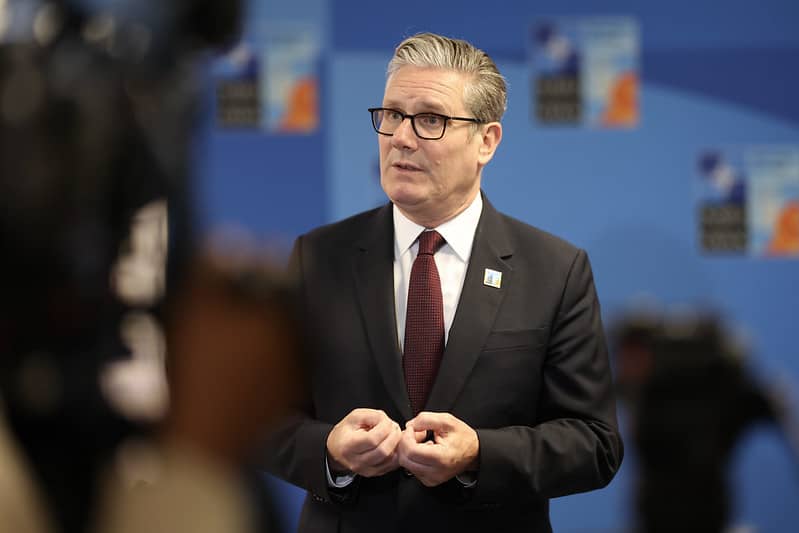
The British pound fell to a four-month low against the dollar and a one-month low against the euro in early trade Tuesday. File image of Prime Minister Starmer. He's under immense pressure to shift government policy leftward. That's a worry for the pound heading into the May election. Source and credit: Simon Dawson / No 10 Downing Street. The British pound fell to a four-month low against the dollar and a one-month low against the euro in early trade Tuesday. Losses were primarily driven by a market adjusting to the Middle East energy shock which will see net energy importers like the UK suffer a growth and inflation penalty in the coming months. Overnight it's reported an Iranian drone hit a fully laden Kuwaiti oil tanker off Dubai in one of the most significant attacks on a vessel in a month of war. U.S. President Donald Trump has meanwhile told aides he’s considering ending the military campaign against Iran even if the Strait of Hormuz remains largely closed, in what amounts to a surrender to Iran. That will end hostilities but allow Iran unfettered control over the Strait and the ability to impose hefty toll charges on shipping. The environment is therefore primed for elevated oil and gas prices relative to before Trump's foray into the Gulf, and that's supporting the dollar while weighing on pound sterling. GBP/USD falls to 1.3159, GBP/EUR to 1.1496. Analysts at Barclays meanwhile warn in a new quarterly FX report that domestic drivers aren't helpful for sterling: we're into April tomorrow, and the final countdown to the May local elections begins. "Geopolitical developments have pushed UK politics to the background, but risks of a more expansionary fiscal policy have likely risen in the wake of the energy shock and the upcoming May local elections," says Lefteris Farmakis, analyst at Barclays. "Accordingly, we pencil in a modest re-widening of the GBP's fiscal premium in Q2 closer to levels prevailing in November," he adds. If we look at what that 'premium' might be, we can start by looking at the charts: pound-euro traded at 1.13 at its November lows and pound-dollar at 1.30. If GBP breaks toward these lower levels, waiting risks locking in a materially worse rate; you can set a target rate now with a specialist provider or secure protection against further downside. Should the pound rebuild similar premiums, then there's a notable downside in the pound to prepare for during the coming quarter. The UK government is heavily indebted, and the rise of the populist left-wing Green Party means its big-spend socialist economic policies are finding a natural affinity with the substantial left-wing rump of the parliamentary Labour Party. This restive contingent of the party is already pushing for a leftward turn in policy, most recently, the abandonment of the government's changes to Indefinite Leave to Remain, which would allow for millions of post-2021 immigrants to be granted British citizenship. They argue the policy must be abandoned in order to extend welfare payments to millions of immigrant families to pull them out of poverty. The programme will cost the government billions in extra spending in the coming years. Barclays forecasts show that a recovery is likely through the second half of the year, allowing the pound to "recover a gradual normalisation towards the middle of the post-EU referendum range." For pound-euro, that amounts to a recovery to 1.1627 by the end of the year.
Pound Sterling Slipping Ahead of the Weekend

Retail sales provide a welcome end to the week for the British Pound and Bank of America looks through near-term headwinds and sees a stronger pound into year-end. Image © Adobe Images The British pound is back under pressure ahead of the weekend. The UK currency started the day on a steady footing, helped by news that UK retail sales comfortably beat expectations in March. The ONS said sales fell last month - by 0.4% month-on-month - but that outcome was less severe than a -0.8% m/m the market was looking for. Retail sales rose 2.5% in the year to February, which was comfortably above the 2.1% expected by markets. Although the data precedes the war in the Middle East, and is therefore somewhat dated, it does indicate that there was an underlying resilience in the economy pre-crisis. The GBP/EUR exchange rate rose to 1.1560 following the release, making for a quarter of a per cent gain for the week. But, selling pressure has since built and the pair is back down at 1.1549. GBP/USD rose to 1.3331, but has fallen back to 1.3305. Compare Currency Exchange Rates Find out how much you could save on your international transfer Amount From GBPUSDEUR To EURUSDGBP Estimated saving compared to high street banks: £2,500.00 Compare Rates from Leading Providers → Free • No obligation • Takes 2 minutes (function() { var amountInput = document.getElementById('cw1n-amount'); var savingDisplay = document.getElementById('cw1n-saving'); function updateSaving() { var amount = parseFloat(amountInput.value) || 0; var saving = (amount * 0.025).toFixed(2); savingDisplay.textContent = '£' + saving; } if (amountInput) { amountInput.addEventListener('input', updateSaving); } })(); The dollar is expected to maintain its strength over the coming days as the world awaits some kind of resolution to the Middle East war. The good news for markets is that U.S. President Donald Trump has extended by ten days his deadline for Iran to negotiate an acceptable settlement, or he ramps up attacks again. However, that's the extent of the positivity and Iran has rejected the initial 15-point plan offered by the U.S., while also saying it will maintain full control over the Strait of Hormuz after the war, which is hardly acceptable to Saudi Arabia and the UAE. So there are ten days of anxiety ahead, and the dollar is the only real winner under such circumstances, which should keep GBP/USD under pressure. Turning to the outlook, Bank of America is out this week with some updated forecasts, saying the pound continues to face near-term headwinds, but from May, the conditions for a more sustained rally will emerge. In the new forecast update, the bank says "we are most constructive GBP (post May local elections), but cautious near-term)." Near-term headwinds include the war in the Middle East and May's local elections that should see the ruling Labour Party receive a drubbing from all sides. City analysts are wary that the Labour Party responds by tacking leftward - in response to Zack Polansk's Greens - and engage big-spend social policies that put the country's finances at risk. Should the government weather the storm and stay the course, Bank of America forecasts Pound-Dollar at 1.43 by year-end, and pound-euro at 1.19. Those bullish FX forecasts will be challenged by the headwinds posed by the war, with the OECD warning the UK is set to be hit hardest by the effects of the Middle East war amongst the G20 economies. The organisation downgraded 2026 growth forecast to 0.7% from a previous estimate of 1.2% and upgraded inflation forecasts, saying it will rise to 4% later this year. Above: PMI data shows businesses have seen a spike in costs this month, which signals an uptick in inflation is coming. "The UK is now on track for one of the highest inflation rates in the G7 this year, according to the latest OECD forecasts, threatening input costs for retailers as energy and transport costs rise," says Phil Monkhouse, UK Country Manager at Ebury. "Consumer confidence is also likely to remain subdued, as rising mortgage rates, higher borrowing costs and renewed inflation concerns linked to the Iran conflict all add up to a rocky outlook for consumer spending." On Thursday it was confirmed by the British Retail Consortium that consumer confidence has plummeted this month, which bodes for a slowdown in economic activity. Earlier, on Tuesday, the S&P Global PMI survey showed businesses faced a significant uptick in cost pressures, confirming that an inflationary hit is building. The pound has thus far weathered the downbeat data because money markets see heightened expectations that the Bank of England will raise interest rates in response to these developments. That lift in interest rate expectations traditionally feeds into a stronger pound. The risk is that higher interest rates and fuel costs push the economy into a downturn, putting the government's finances under pressure. The Labour government will find it difficult to resist calls by its left-wing MPs for some kind of assistance package for low earners, which would only heap pressure on public finances. But with the UK's lenders already wary about the outlook, the prospect of a major selloff in bonds and the pound will grow if they choose this route.
Pound Sterling Headwinds Blow as Consumer Confidence Collapses in March
Pound Sterling eased against the dollar and euro on Thursday, extending losses on signs the UK economy will experience a notable slowdown in the coming months, leading investors to pare back expectations for further Bank of England tightening. Image © David Holt, Accessed: Flikr, Licensing Conditions: Creative Commons Pound Sterling eased against the dollar and euro on Thursday, extending losses on signs the UK economy will experience a notable slowdown in the coming months. Investors have already pared back expectations for further Bank of England tightening over the past 48 hours as fears of a retrenchment in domestic demand grow. On Thursday, the British Retail Consortium's consumer confidence measure plummeted in March. Its measure of expectations for the economy over the next three months plunged to -53 in March from -30 in February, marking the worst reading since the survey began in March 2024. "Consumer confidence collapsed as the Middle East conflict raised the prospect of higher inflation in the months ahead," said Helen Dickinson, chief executive of the BRC. "Just as the economy was beginning to turn a corner on inflation, the rise in global energy prices is particularly unwelcome for businesses and families." The British consumer is the backbone of the country's services-oriented economy, and falling demand points to a slowdown in the coming months. Market pricing for additional rate increases has softened markedly, with traders now anticipating around 60 basis points of tightening this year, down from roughly 86 basis points expected last week. Traditional FX market dynamics mean falling rate expectations would be expected to weigh on the pound: GBP/EUR trades at 1.1560, and the month's high is at 1.1612. GBP/USD trades at 1.3366, down from 1.3479. (See how your bank shapes up against specialist FX providers when it comes to transferring funds overseas, here). Above: GBP/USD at daily intervals. Megan Greene, considered one of the more 'hawkish' members of the Bank of England's interest rate-setting committee, said the economy is weaker now than it was heading into the 2022 energy price shock caused by Russia's invasion of Ukraine. Back then, interest rates were lower and households were flush with Covid-era savings, which helped fuel a significant spike in inflation. Greene said that inflation risks are higher owing to the Iran conflict but there is also increased downside risk to demand, meaning any sharp slowdown in consumption could help limit the pass-through of higher energy costs into core inflation. Her message is contrary to a market that is aggressively poised for up to three rate cuts this year. If bets for further rate cuts continue to fall, the pound could retreat further, particularly if concerns about the economic outlook continue to grow. "We believe the ECB is more likely than the BoE to raise rates in response to the energy crisis from the Iran war, while market pricing for both the ECB and BoE suggests they will respond in practically the same way," says Andrzej Szczepaniak, an economist at Nomura. If this assessment is the correct one, it means there will be a faster decline in UK rate expectations relative to the Eurozone. Traditional FX feed-through would imply that the pound falls under the euro under such a scenario. Incoming survey data confirms both consumers and businesses are fearful of the looming inflationary impact caused by the war, with fuel bills rising now, and gas and food prices to follow in the coming months. Tuesday's release of PMI survey data from S&P Global showed businesses experienced a sharp increase in price pressures in March, as seen in the chart above. "Inflationary pressures have surged higher on the back of rising energy prices and fractured supply chains. The acceleration in cost growth in the manufacturing sector was especially severe, being the sharpest since the depreciation of sterling following Black Wednesday in 1992," says Chris Williamson, Chief Business Economist at S&P Global Market Intelligence. "While faster hikes from the BoE and ECB may offer some near-term support for the euro and pound by lifting yields, those gains could ultimately prove short-lived if tighter monetary policy alongside higher energy prices trigger a deeper economic slowdown/recession for European economies," says Lee Hardman, FX analyst at MUFG Bank Ltd in London.
The Pound's Looming Inflation Headache

Core and services CPI inflation are still uncomfortably high. Image © Adobe Images For the pound, core and services CPI inflation is too high as Britain heads into another inflationary shock. The British pound saw a small, albeit noticeable, bid in the wake of news that UK inflation stayed at 3.0% y/y in February. However, we think the currency's sanguine reaction reflects an underlying anxiety about where the economy is headed. Because, beyond the headlines we see signs of underlying inflationary stubbornness ahead of another spike in inflation due to the Iran conflict: Core CPI was at 3.2% vs. 3.1% expected and 3.1% prior. Services CPI was at 4.3% vs. 4.2% expected and 4.4% prior. Core and services CPI are important as they signal to the Bank of England what the underlying inflationary trend is doing. In short, these two components must fall further if headline CPI is to settle at the Bank's 2.0% target on an enduring basis. Although there has been some progress in services inflation, it has been too slow to be of comfort ahead of another rise in energy, food and good prices. Tuesday's release of PMI survey data from S&P Global shows that British businesses are already seeing a big pickup in cost pressures, which will ultimately be felt by consumers in the coming months. "Inflationary pressures have surged higher on the back of rising energy prices and fractured supply chains. The acceleration in cost growth in the manufacturing sector was especially severe, being the sharpest since the depreciation of sterling following Black Wednesday in 1992," says Chris Williamson, Chief Business Economist at S&P Global Market Intelligence. What Today's Data Means for Your Money Transfer The pound has edged higher, but the move lacks strong momentum, suggesting markets are not yet convinced of a sustained trend. For those planning a transfer, this creates a more balanced risk environment rather than a clear directional signal. If you are buying foreign currency, there is no immediate pressure to act, but the lack of upward momentum in GBP limits the potential for significantly better rates. If you are selling foreign currency, current levels remain broadly stable, but gains may be gradual rather than sharp. 👉 You can compare current GBP rates here to see how the market is pricing transfers. According to Tuesday's PMI release, 47% of goods producers reported a rise in their input costs, while only 2% reported a decline. This pointed to the sharpest rate of input price inflation in the manufacturing sector for nearly three-and-a-half years. Also, the acceleration in price pressures since February was the largest seen for over three decades. The UK meanwhile enters a new inflationary cycle with higher inflation than comparable countries, which explains why UK borrowing costs are higher than elsewhere and why markets see it as particularly vulnerable to the impact of higher energy prices caused by the war. According to the PMI data, service providers also recorded a marked increase in their average cost burdens, with 38% of the survey panel reporting a rise and only 2% experiencing a fall. Higher inflation will mean the Bank of England will have to hold interest rates for an extended period, at the very least. Market pricing, meanwhile, suggests that the Bank won't have this luxury and will have to hike; in fact, money markets show a minimum of at least two hikes are expected this year. On balance, this should support the pound relative to currencies belonging to central banks that will be less hawkish. However, it's a fine balance: at what point does high inflation and a struggling economy become a headwind to the currency? After all, assets attached to stagflationary economies are hardly compelling. "While faster hikes from the BoE and ECB may offer some near-term support for the euro and pound by lifting yields, those gains could ultimately prove short-lived if tighter monetary policy alongside higher energy prices trigger a deeper economic slowdown/recession for European economies," says Hardman. Take Control of Your GBP Transfer With markets lacking strong direction, current conditions favour control and optimisation rather than urgency. If you need certainty: 👉 Lock in a rate today If your timing is flexible: 👉 Get a quote and compare rates Even small differences in pricing can have a meaningful impact on larger transfers.