

Image © Adobe Images
The dollar has rediscovered a powerful source of support: the U.S. economy.
According to HSBC, Friday’s stronger-than-expected employment report marked a turning point for markets, prompting investors to refocus on cyclical drivers such as growth, inflation and interest rates.
"The USD’s strident reaction to Friday’s stronger-than-expected employment report shows the power of cyclical drivers has returned," says the bank.
The economy filled 172K jobs in May, easily surpassing expectations for 82K, prompting the dollar to rally 0.63% against the pound and 0.75% against the euro.
"Another resilient reading saw the USD soar as the market moved to fully price in a Fed hike this year with two hikes nearly fully priced over the 12 months," says HSBC.
The repricing in interest rate expectations was evident in higher Treasury yields and a fall in stocks; a combination that is traditionally supportive of USD.
Attention now turns to Wednesday’s inflation report.
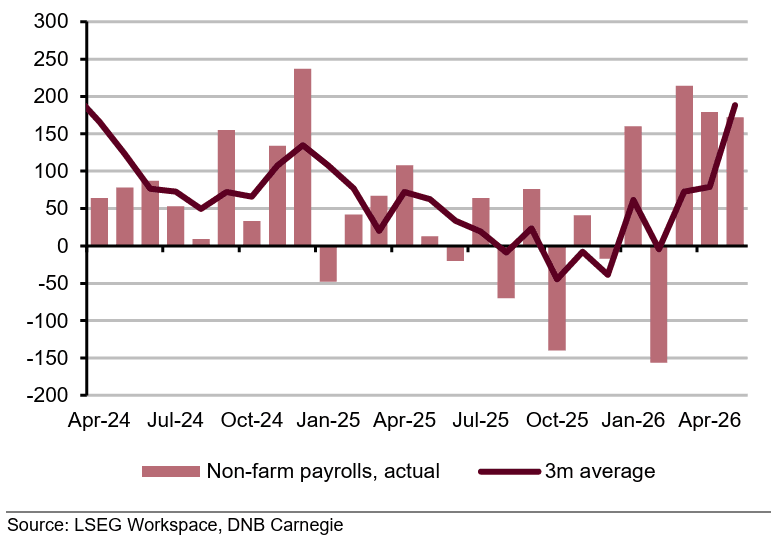
Above: America's improving employment dynamics.
"US CPI data for May, due out on Wednesday, could see this shift in mood extend further," says HSBC, explaining a robust inflation print would reinforce the view that the Federal Reserve still has work to do, potentially adding further support to the dollar.
However, HSBC cautions that longer-term headwinds have not disappeared: "While the cyclical drivers favour the USD, some structural headwinds are coming back into view."
One of those is the growing debate around Federal Reserve independence.
In a weekend interview, President Trump argued that interest rates should be lower, prompting HSBC to note that "the topic of Fed independence may gain prominence once again."
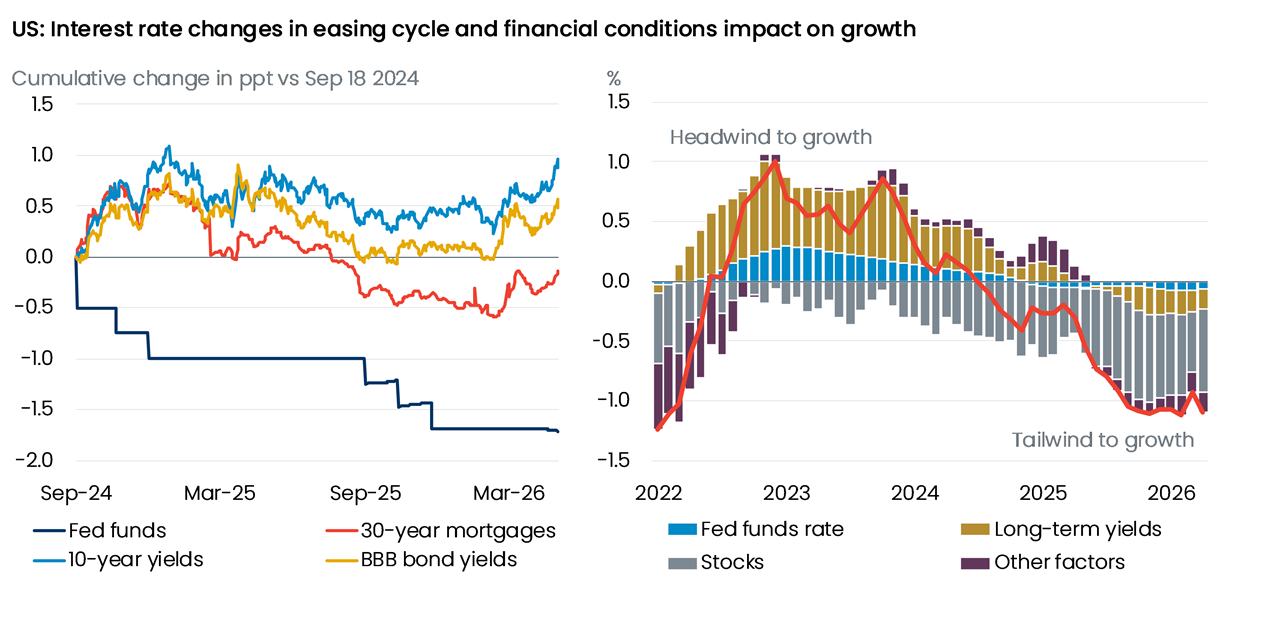
Fed rates are arguably too low.
Kevin Warsh will lead his first meeting of the Fed next week, where he will face off against fellow policy makers who will argue inflation is running uncomfortably high and therefore rate hikes should be considered.
Limiting the dollar's near-term momentum are technical resistance in some key FX pairs.
HSBC points to key technical and policy levels in both EUR/USD and USD/JPY that are limiting the dollar’s advance: "USD-JPY did creep above 160.00 on Friday and again overnight, but has retreated a little this morning."
Japanese authorities have repeatedly warned against excessive currency weakness, while expectations for a Bank of Japan rate hike remain alive following a less severe-than-expected revision to first-quarter GDP.
Meanwhile, the euro continues to find support ahead of this week’s European Central Bank decision. "For EUR-USD, support at 1.15 is proving helpful as is the prospect of a rate hike later this week."
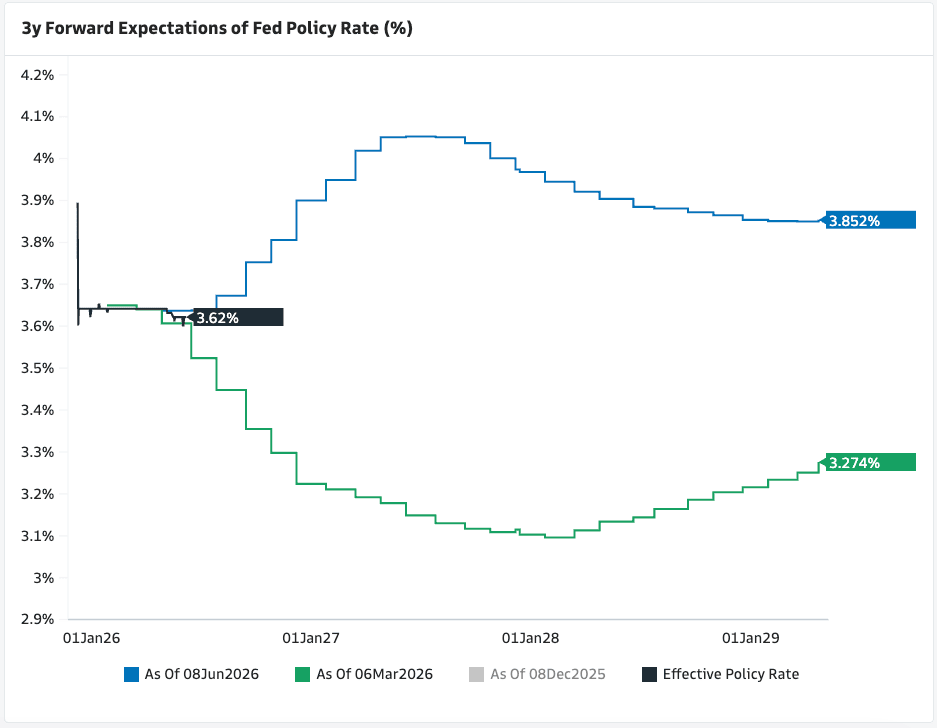
Above: The market has rapidly moved from expecting rate cuts to rate hikes. That's been supportive of USD.