

Image © Adobe Images
The pound to Australian dollar exchange rate (GBP/AUD) is preparing for a breakout. However, this week could be too soon for it to be realised.
The pair is unchanged on the day at 2.0065, which effectively means it is largely unchanged from where it traded for most of the previous week.
Although the market looks becalmed, we see a significant battle underway here, with the stakes being high. How the current battle evolves could well determine how the remainder of the year plays out.
As things stand, technicals indicate a market that favour GBP/AUD weakness:
We're below the nine-day exponential moving average (EMA), currently located at 2.0084. The nine-day EMA is pointing lower, and this simply suggests we're holding a downside bias for the coming week.
We're also below the 200-day EMA, which gives the global signal that the pair is in a multi-week downtrend.
Putting these signals together, and we get the sense that the current consolidation will resolve with a break lower.
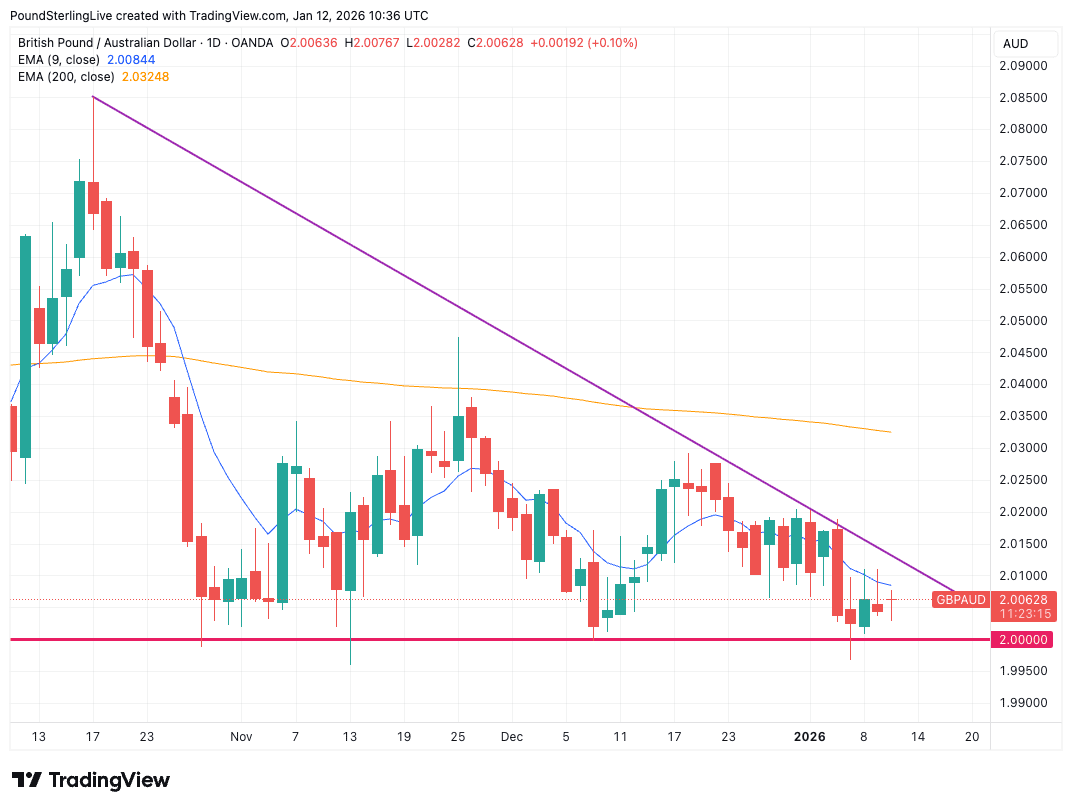
The chart illustrates downside momentum via the purple, downward-sloping trendline.
It also reminds us of the matter of the significant support line at 2.0, drawn in red.
This is a massive round-number support that has defended pound sterling since October.
We won't underestimate its power and it's why we would be wary of betting on a big downside move this week and suspect that it will require another shift in Reserve Bank of Australia policy expectations in a hawkish direction - i.e. building bets for a rate hike by mid-year - to shift AUD into a new higher gear.
Converseley that impetus might come from a broader GBP selloff. For that to happen, we'd want to see next week's inflation data undershoot expectations.
Absent these, GBP/AUD could simply start melting up again.
So there's a big move cooking, but we're waiting for the trigger. Until it comes our forecast is for the constrictive trading trends to extend for a few days yet.