

Image © Adobe Images
The pound slips against the euro as UK PMI data reveals a severe surge in business costs.
Pound sterling declines against the euro on the day it's reported the war in the Middle East caused business costs to surge in March. The S&P Global survey of private UK business activity revealed a sharp slowdown in activity during March, with the headline composite PMI falling from 53.7 to 51, underwhelming against consensus expectations for a reading of 52.8.
Weakness was concentrated in the important services sector, which accounts for the bulk of the British economy, where the PMI fell to 51.2 from 53.9, coming in below expectations for 53. The manufacturing sub-component held up at 51.4 and beat expectations for 51.1.
The pound-euro pair retreated to 1.1550 in the minutes following the release, paring the previous day's recovery from Friday's lows towards 1.1520.
S&P Global says the slowdown in business activity was due to the Iran war and business activity expectations for the year ahead also eased considerably since February, with optimism at its lowest since June 2025.
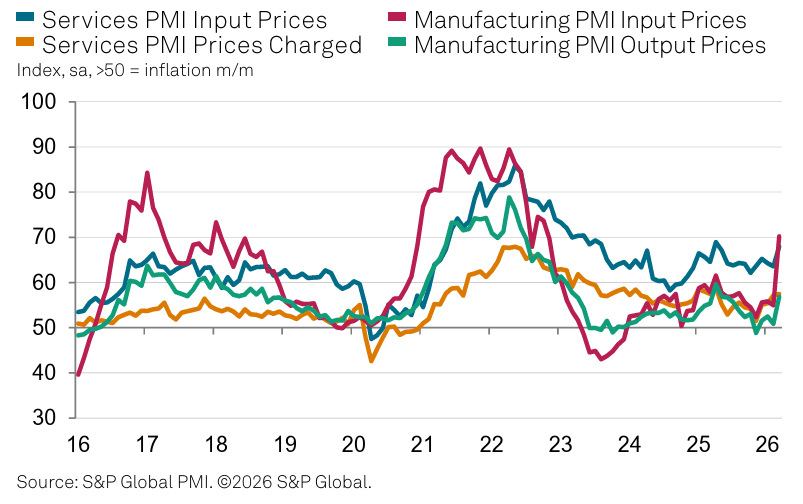
There was a rapid acceleration in cost pressures across the UK private sector, which was overwhelmingly linked to rising prices paid for fuel, transportation and energy-intensive raw materials:
S&P Global.
"Inflationary pressures have surged higher on the back of rising energy prices and fractured supply chains. The acceleration in cost growth in the manufacturing sector was especially severe, being the sharpest since the depreciation of sterling following Black Wednesday in 1992," says Chris Williamson, Chief Business Economist at S&P Global Market Intelligence.
47% of goods producers reported a rise in their input costs, while only 2% reported a decline. This pointed to the sharpest rate of input price inflation in the manufacturing sector for nearly three-and-a-half years.
Also, the acceleration in price pressures since February was the largest seen for over three decades.
Service provides also recorded a marked increase in their average cost burdens, with 38% of the survey panel reporting a rise and only 2% experiencing a fall.
"In an echo of 2021-22 the UK survey confirmed that higher energy prices have led to a widespread increase in manufacturers costs. However, it also showed that the broader economic environment is very different. Whereas in 2021-2022 output and employment surged despite rising input costs, now uncertainty, higher costs and higher interest rates have caused a slowdown in output growth and a drop in orders," says Andrew Wishart, UK Economist at Berenberg Bank.
The Bank of England opted to keep interest rates on hold last week as it recognised looming inflationary threats, and money markets show investors think the Bank will have to respond to rising inflation by raising interest rates again this year.
Williamson says the Bank must be careful that it doesn't "exacerbate downturn risks" by raising rates too aggressively.
The prospect of higher rates at the Bank of England are providing some support to the pound, which has recovered against some of its G10 peers over the course of the past month.
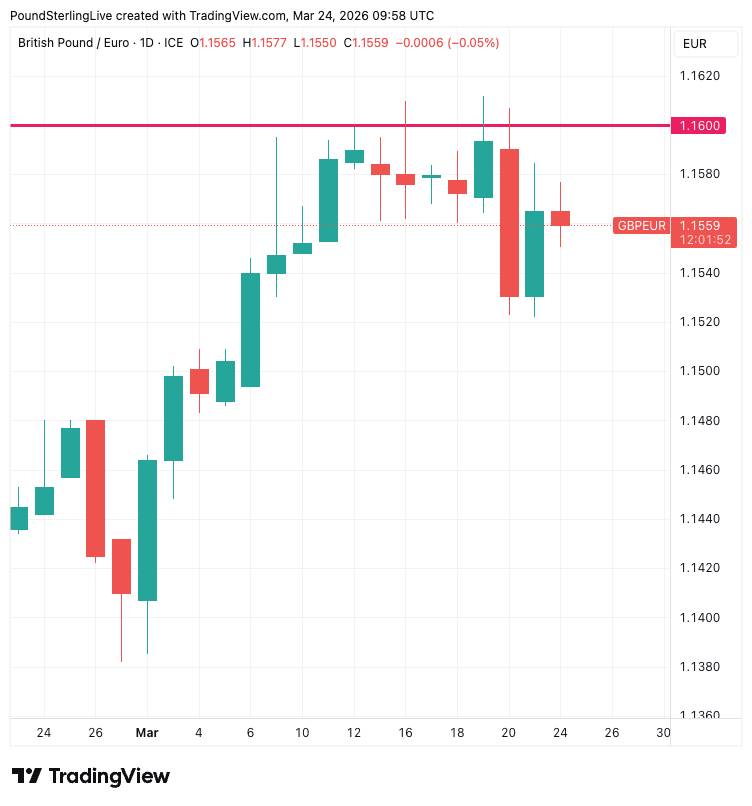
However, that rates support is not necessarily working in favour of the pound against the euro, with the GBP/EUR steadily declining from peaks near 1.16 over recent days.
FX Strategist Nick Kennedy, at Lloyds Bank, says the pound should see a "stuttering" move lower against the euro in the coming weeks.
Aiding the euro against pound sterling is a 'hawkish' shift in interest rate expectations in the Eurozone, where the ECB is anticipated to raise interest rates in the coming months.
Eurozone PMI data released just half an hour before the UK edition showed a near stalling of output growth in the eurozone private sector.
At the same time, "a marked acceleration in the rate of input cost inflation," was detected.
"The flash PMI data underscore how the European Central Bank is no longer in a 'good place' with respect to growth and inflation, and will have to tread a cautious path," says Williamson.