
Image © Adobe Images
The British pound can extend its short-term rally in the next few days, but Bank of England and ECB communication will prove a challenge on Thursday.
The pound-euro exchange rate hovers at 1.1540 at the time of writing Monday as it defends the previous week's half-per cent gain ad looks to extend the steady ascent from the lows near 1.1440, reached at the start of the month.
The next target in scope for the rally is 1.1560, a horizontal support-and-resistance level that tends to arrest movement in the exchange rate.
1.1560 is, in fact, the start of a resistance zone that leads up to the big-figure 1.16 level, where the year's highs are located and where GBP/EUR struggles to get beyond.
Gains are underpinned by supportive momentum signals, with GBP/EUR trading above short- and long-term moving averages. Momentum on the RSI is also constructive.
The pair is rising as part of a multi-week recovery sequence from the lows at 1.12865 when anxiety over Rachel Reeves' November 2025 budget was at its peak.
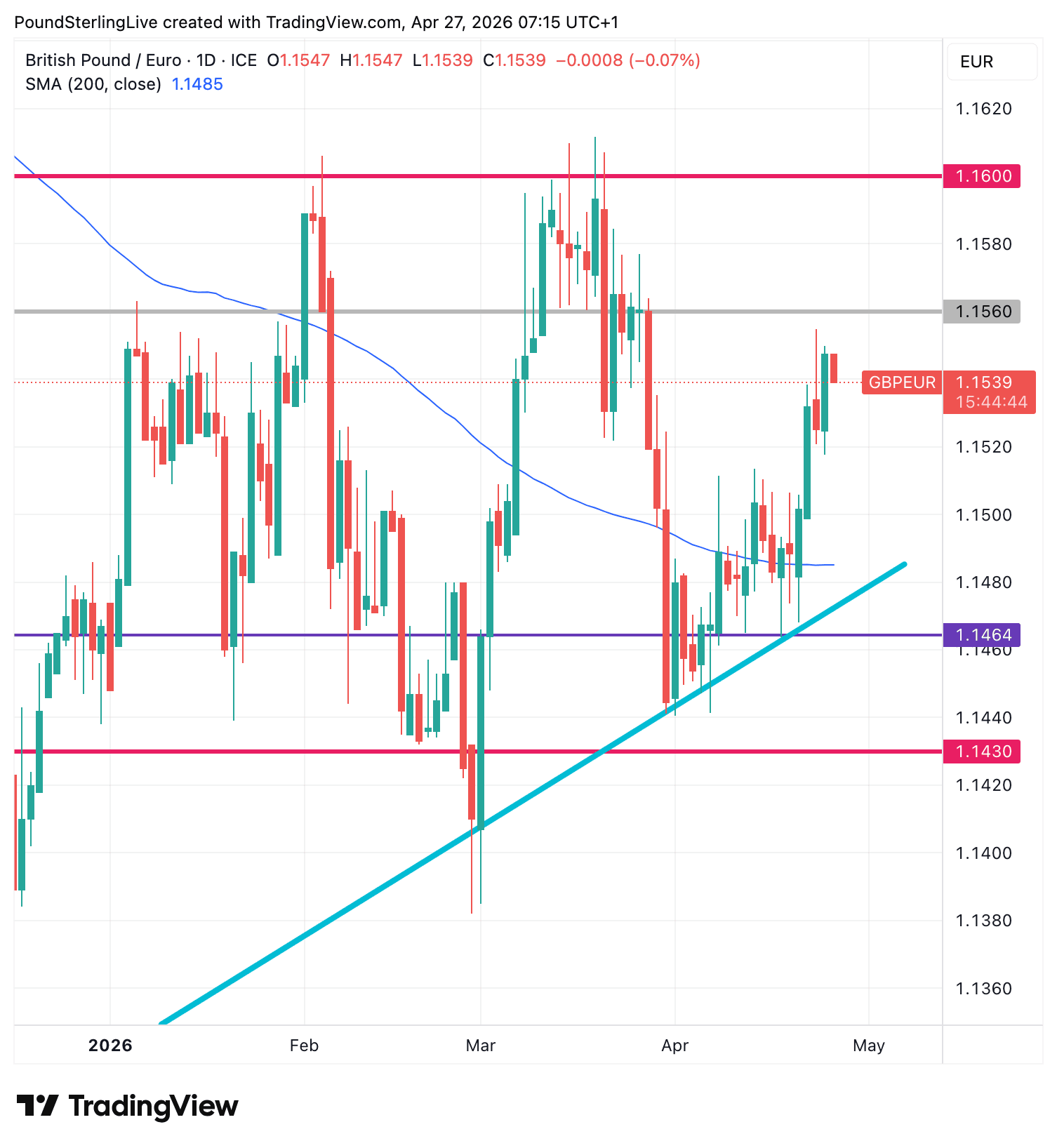
The conflict we're faced with is how that steady rise negotiates the clear resistance at 1.16: already this year we have seen the rally falter at the level, albeit the resultant pullbacks have tended to be sequentially shallower, ensuring the trend is still alive and that eventually a break through 1.16 is likely.
Of course, that's the technical theory, but the reality is that for pound sterling to continue its advance, fundamental drivers must stay supportive.
In the week ahead, we'll be watching for further progress towards peace in the Middle East: a big downside risk to the pound-euro exchange rate is a market meltdown linked to fears that the hoped-for end to the war won't arrive.
Domestically, the Bank of England is in focus. Here, the Monetary Policy Committee is expected to leave interest rates unchanged but fight market expectations for at least two hikes before the end of the year.
Such an outcome would mean Thursday presents 'dovish' risks for the British pound.
"Financial markets are once again pricing upwards of two Bank of England rate hikes this year. Governor Andrew Bailey won't like that," says James Smith, Developed Markets Economist at ING Bank.
Bailey and the MPC are expected to confirm they want to see how the data evolves, but equivocate that the next move could as easily be cut as a hike.
That could deflate rate hike bets and weigh on the pound.
Complicating the situation is that the European Central Bank (ECB) is also in focus Thursday. Here, analysts think there is a chance that the central bank in Frankfurt strikes a 'hawkish' tone, i.e. verifies bets that a precautionary rate hike is preferable given rising inflation threats.
That would bolster the euro across the board and put GBP/EUR under pressure.
"The tone at the ECB is likely to be more cautious, with the Governing Council set to repeat it willingness to tighten policy as needed," says a preview note from Lloyds Bank. "There is more room to use rates as a signalling/insurance mechanism to reinforce credibility, without generating significant trade-offs on the demand side."