
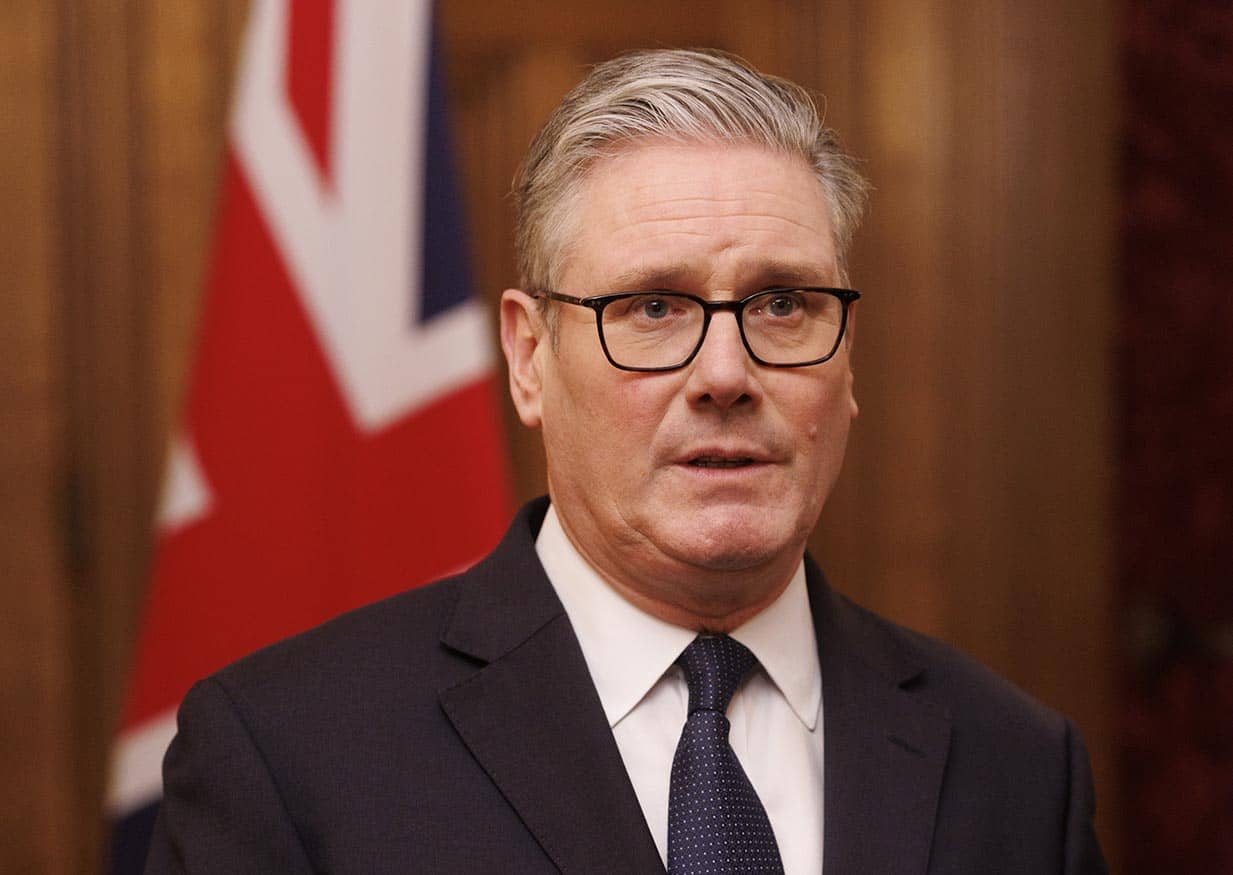
Picture by Simon Dawson / No 10 Downing Street
Pound sterling starts the new week on a soft footing against the euro as trading desks listen to Prime Minister Keir Starmer's Nth 'reset' speech of his premiership.
Although it would be tempting to say the pound-to-euro exchange rate's slide to 1.1550 is because the market is nervous about Starmer being replaced by a left-wing alternative, we would caution against overestimating the pull of politics at this juncture.
Instead, we're watching another rise in oil prices on Monday, which has in turn raised the cost of government borrowing across all tenors of the bond market, further clouding the fiscal outlook. A study of the markets will show a strong correlation between borrowing costs and oil prices, and that means the coming week will be as much about the Middle East as it is about Downing Street.
Starmer has held a reset speech on Monday following last week's election drubbing. It's important to note his audience is more likely his MPs than the public, and the risk is that he would announce some unforeseen costly policy.
He said he's going to nationalise British Steel, but, in isolation, that's probably not a massive worry for bond markets. If he tries to do more of the same, then it could be.
It's been a weekend of fevered speculation about the Prime Minister's future, and traders will have been forgiven for pricing some political uncertainty into GBP/EUR, which fell from 1.1570 to 1.1535 in relatively short order at the open.
It's since pared most of those losses, suggesting there's no real sense of panic emerging in the market as far as Starmer being replaced is concerned, even if there's a definite sense of nervousness.
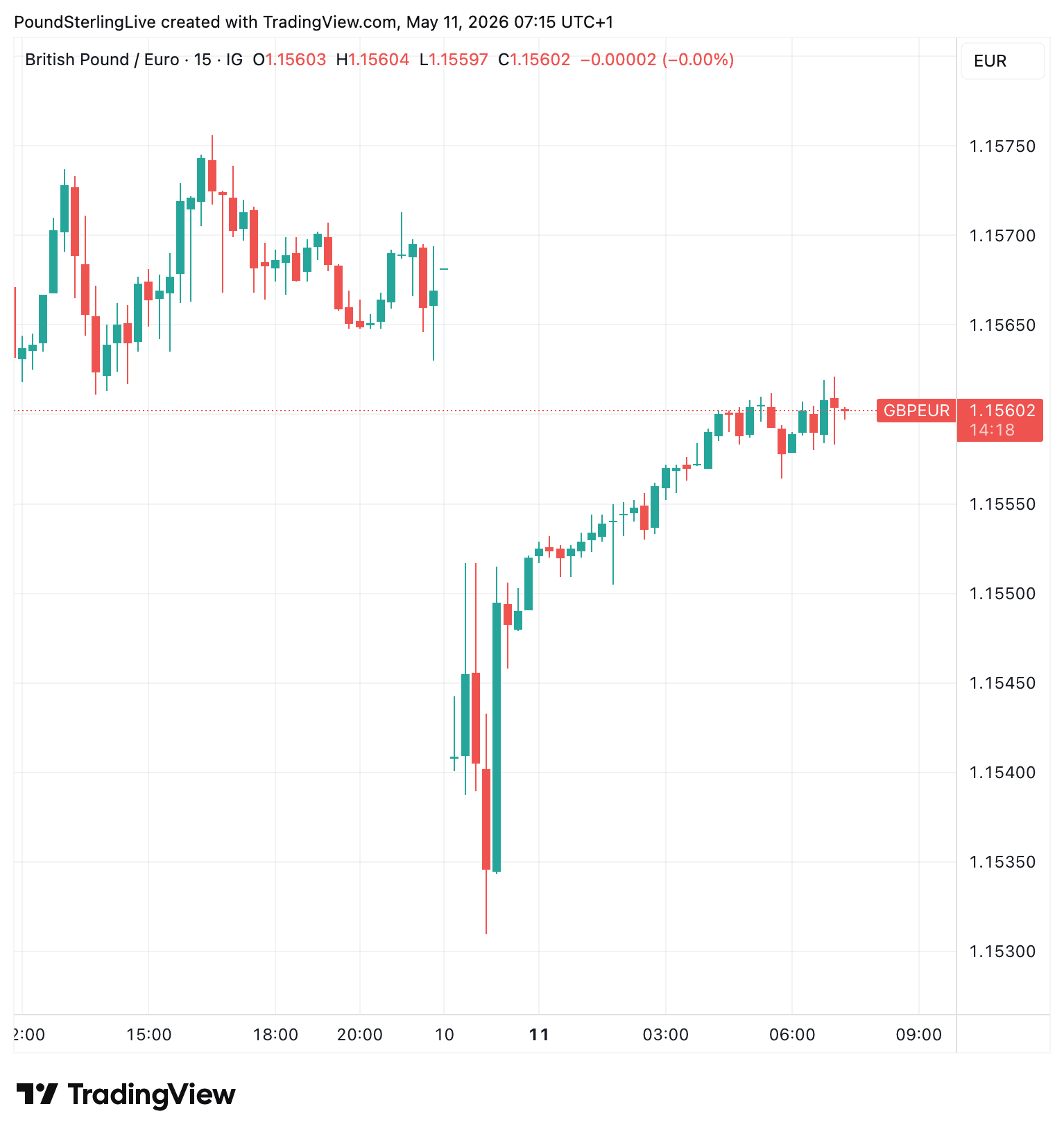
Above: GBP/EUR gaps lower at the open.
The Labour Party received a drubbing in last week's local and devolved elections and MPs in Parliament know their jobs are on the line and are desperate for some kind of reset.
"For the pound, the decisive phase has only just begun, with an uncertain outcome," says Michael Pfister, currency strategist at Commerzbank.
The market is worried that Starmer and his finance chief, Rachel Reeves, will ultimately exit Downing Street, and with them the commitment to spending discipline.
There's talk of a "stalking horse" leadership challenge from an unheard-of MP, while the usual names of Burham, Rayner and Streeting are also being discussed in the press as challengers.
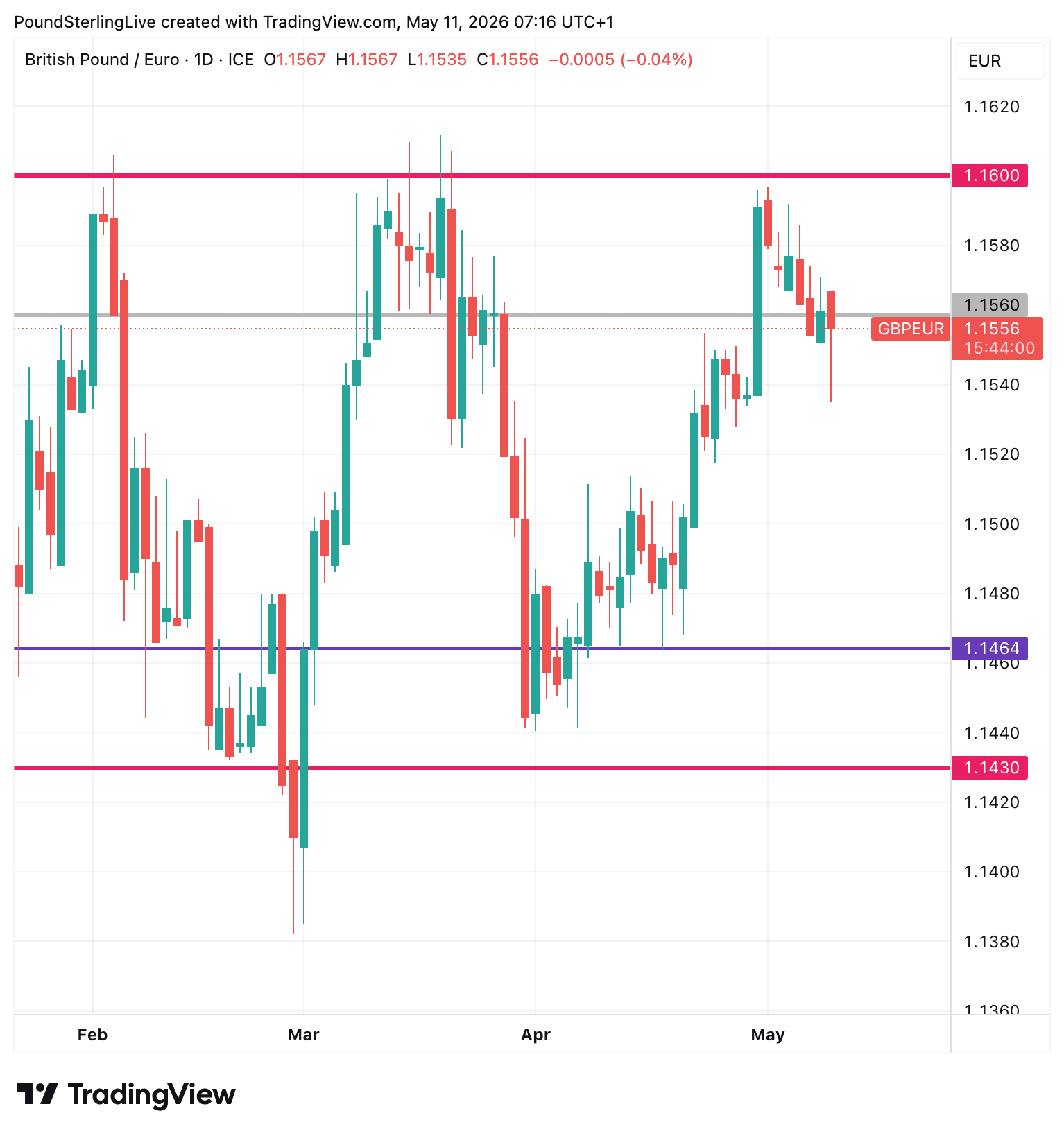
Above: GBP/EUR is well supported medium-term, albeit still constrained by the 1.16 barrier.
For his part, Starmer has indicated he is going nowhere, enlisting Labour 'big beasts' Brown and Harman to his cabinet to help prevent any mutiny.
Only when Cabinet members start resigning will Starmer have to concede it's over, and we're a long way from that point and suspect that Starmer will hold on.
Nevertheless, a period of political intrigue should be enough to keep a lid on pound-euro upside potential in the coming days and we could look for a steady drift back towards Monday's lows at 1.1535 in the coming two days.
We suspect GBP/EUR downside will be relatively limited if Starmer digs his heels in, as that will allow market focus to wander elsewhere. For the pound, that would prove supportive thanks to Britain's elevated bond yields.
If political risk fades, the attractiveness of UK bonds to international investors could prove supportive and help the GBP/EUR exchange rate back towards 1.16, and maybe even above, later in May.