
- GBP/EUR seen closer to 1.19 in 2026
- JPY faces notable structural headwinds
- USD to see a gradual decline
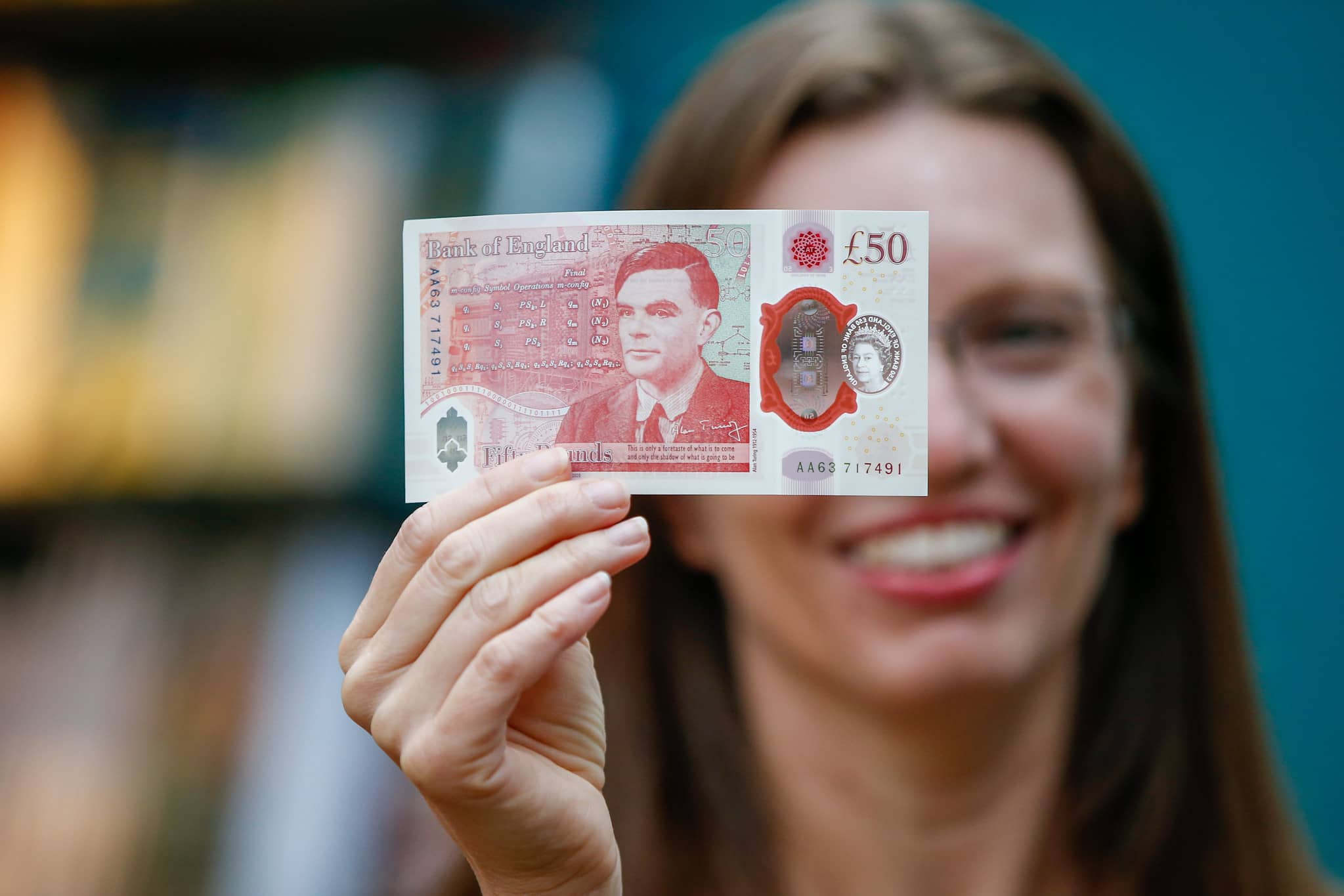
Image © Bank of England
Bank of America Global Research swims against the consensus and backs the pound.
The consensus prediction amongst investment bank analysts is that 2026 will be characterised by further underperformance of pound sterling.
"We're happy to take the other side of that," says Adarsh Sinha, FX and Rates Strategist at Bank of America, in a media briefing Thursday, in which he introduced his team's key themes and forecasts for the coming year.
He opined that consensus year-ahead views tend to get burned out pretty early in any given year. Given this, ideas previously seen as contrarian can be adopted quickly as traders look for a new anchor.
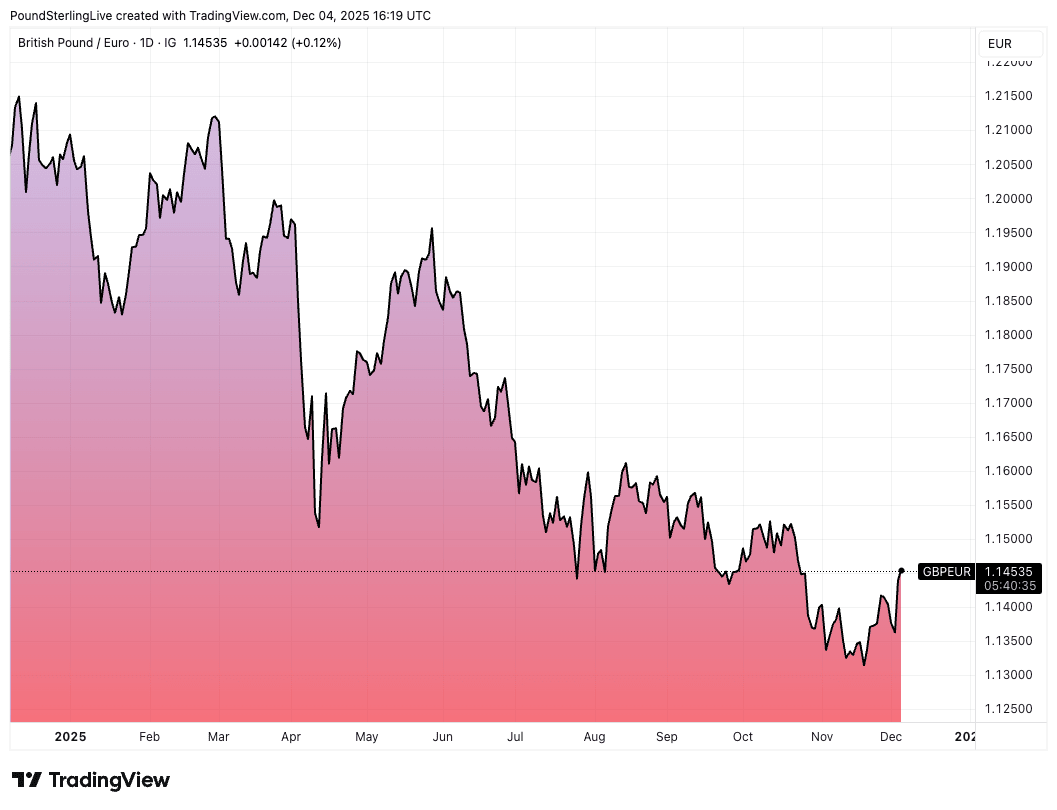
The pound is down 5% against the euro this year, and the consensus is extrapolating that trend into another year.
To be sure, BofA is also bullish on the euro's prospects, but the single currency won't outperform a pound that can shake off recent worries over the UK's budget.
A sizeable premium was demanded of sterling heading into the November budget, with investors concerned the government would announce policies that would upset the bond markets.
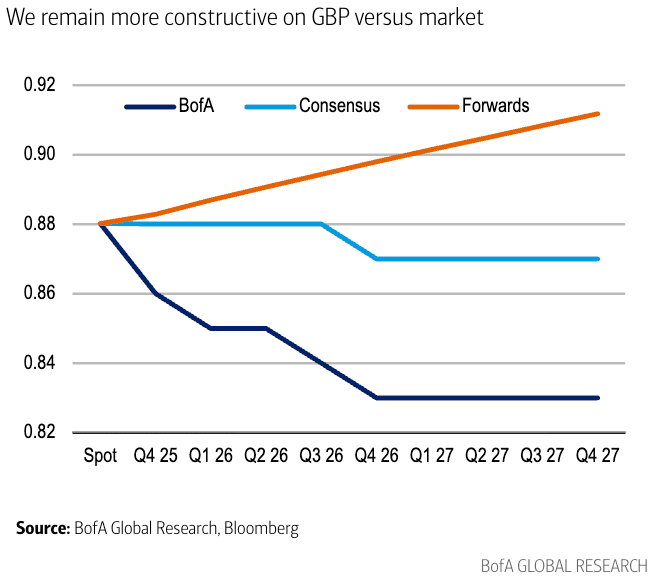
Image is courtesy of Bank of America Global Research.
Now, with the budget having passed without drama, the pound is at a fork in the road: does that risk premium dissipate or does it become entrenched?
Bank of America thinks the former is the most likely: that premium can continue to lift, and the pound will recover as a result.
"This Budget has the buy-in from the OBR (who prepare macro forecasts for the Government) and the Chancellor has reinforced the commitment to keep the Fiscal Rule and raise the Fiscal Headroom. These are important anchors which should lead to a relief rally in GBP as the release valve of event risk has passed," reads Bank of America's year-ahead outlook.
BofA forecasts EUR/GBP at 0.84 by year-end, which gives a pound to euro conversion of 1.19.
Following on from the dollar's largest annual decline since 2017, more weakness is in store next year, which makes for a GBP/USD year-end forecast of 1.45.
Of the Dollar, BofA says:
"We expect this trend to continue into 2026, albeit at a more moderate pace. Heading into next year, many of the same themes/conflicts in markets remain unresolved."
Speaking to the media alongside Sinha was FX strategist Alex Cohen, who said a potential risk for the greenback is a building risk premium surrounding the role of the Federal Reserve and its independence.
"The administration is clearly discussing affordability," Cohen said, adding that it's looking at addressing the issue "through the lens of lower rates."
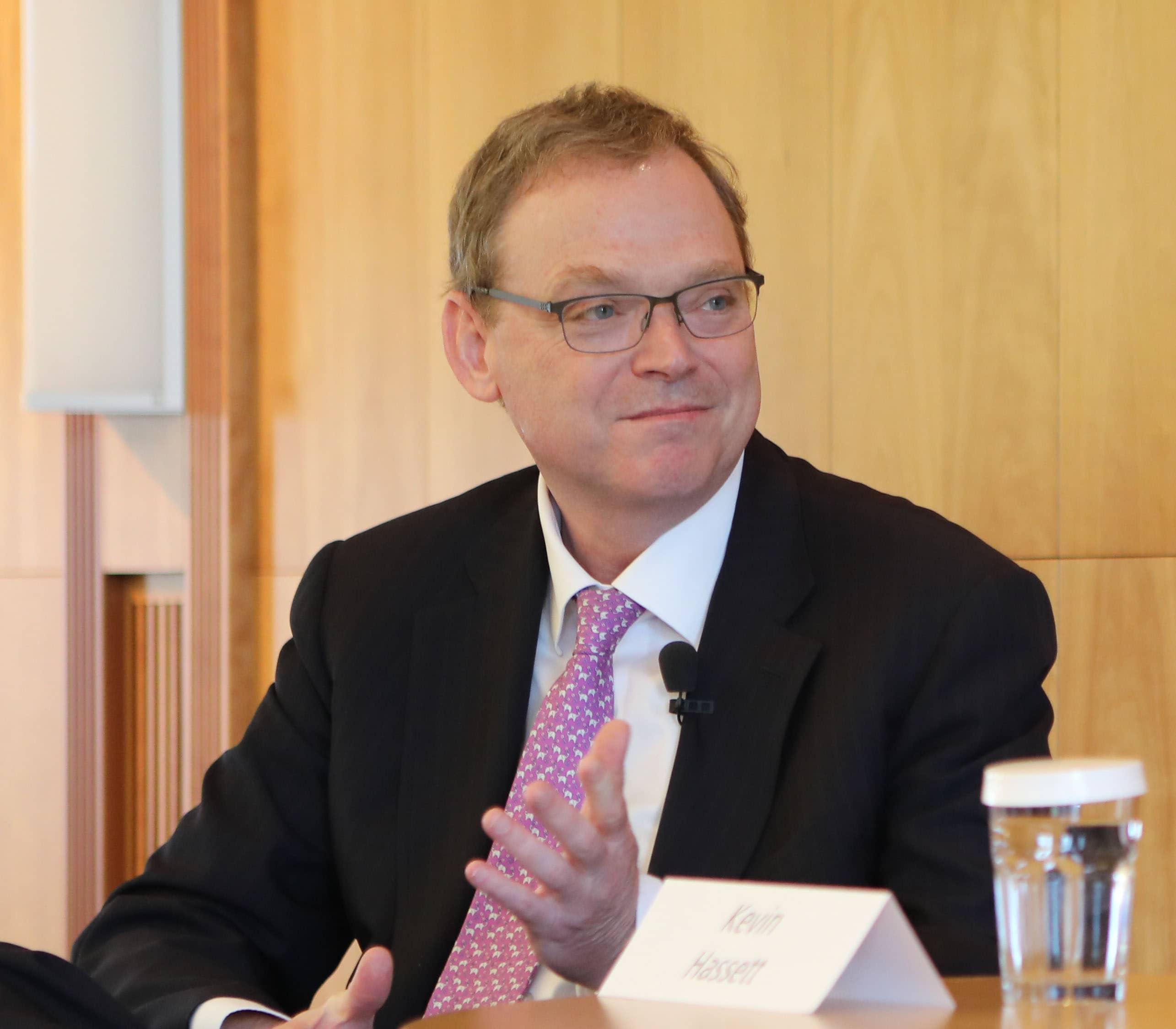
Above: File image of Kevin Hassett. He's a Trump ally, heavily favoured to replace Jerome Powell as Fed Chair. Copyright: U.S. Government Work.
Lower real rates, thanks to Fed rate reductions, and potential concerns over Fed functionality under a new Chair tied to White House policy, would pose headwinds to the dollar.
Another anti-consensus view adopted by BofA concerns the yen.
Yen upside is a strong consensus view for next year, largely on account of the Bank of Japan raising interest rates. However, BofA thinks the structural headwinds are too significant and they're also happy to swim against the flow here.
"Japan is seeing structural outflows... Japan has been a cash-rich society for many years," Sinha told journalists. "Inflation is no longer zero, and when inflation is no longer zero that's a problem."
Households and corporates are diversifying as cash is put to work, and most of that diversification is ex-Japan.
"As long as that continues, the yen will remain structurally weak," says Sinha.
USD/JPY is forecast to end the year at 155.