
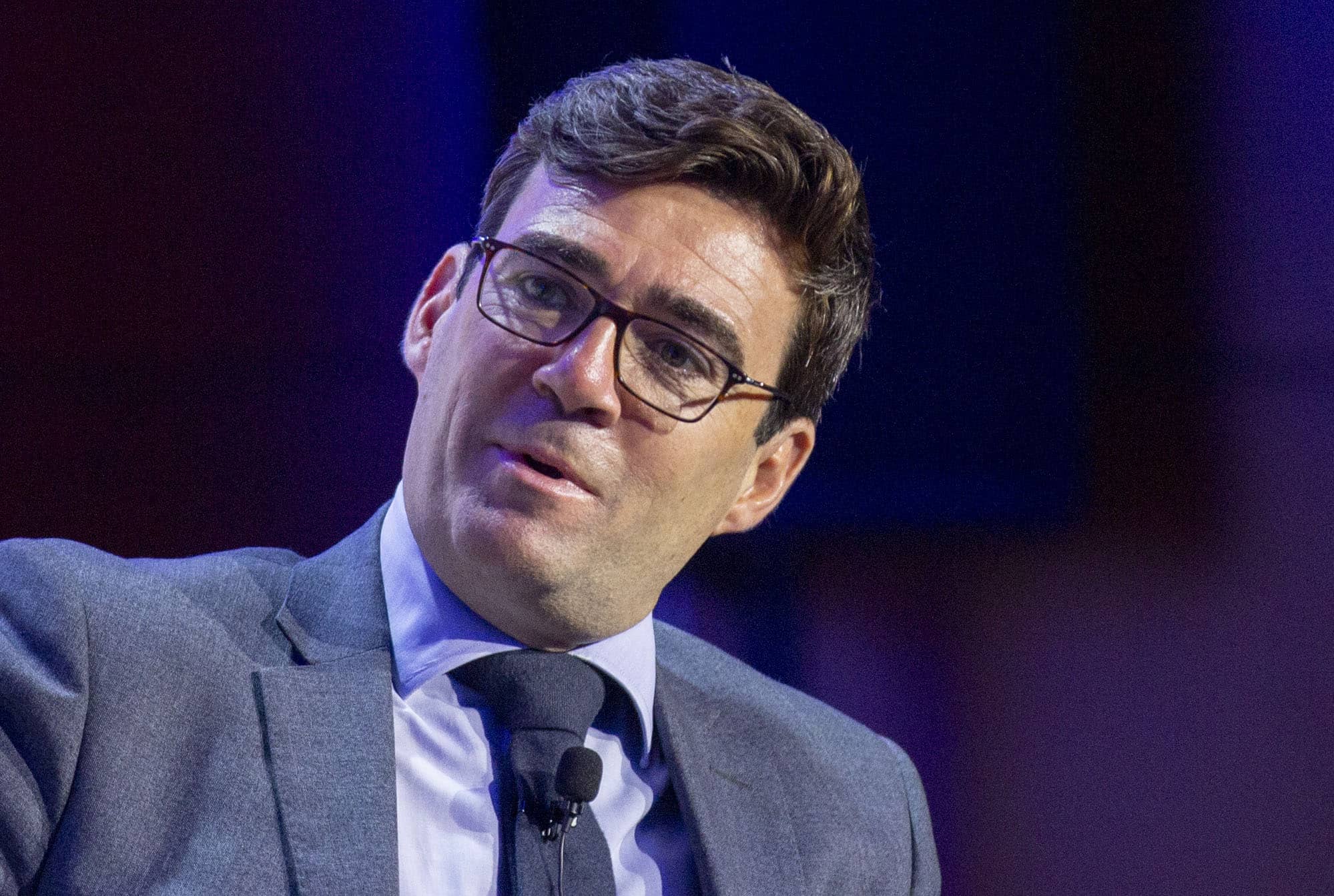
File image of Andy Burnham. Copyright by World Economic Forum / Faruk Pinjo.
Andy Burnham backtracks: he won't test the bond markets.
The British pound rose after the UK's (likely) next Prime Minister confirmed he won't toy with the country's fiscal rules.
Andy Burnham confirmed late Monday that he will not amend the existing fiscal rules that are designed to ensure the country's debt liabilities remain sustainable if he becomes PM, triggering a recovery in sterling.
A spokesperson for Burnham told Bloomberg the leadership hopeful is "explicitly ruling out any changes to the existing fiscal rules." The fiscal rules are guardrails that prevent governments from borrowing too much by committing them to bring overall debt down on a multi-year horizon.
The news was welcomed by traders: the pound rallied as markets reduced some of the political risk premium associated with a future Burnham government.
The pound to euro rate rose half a per cent to close Monday at 1.1514, and it holds those gains this Tuesday. The pound to dollar rate advanced 0.80% to 1.3432.
"GBP/USD held onto most of yesterday’s gains sparked by Andy Burnham’s pledge to not change the UK’s self‑imposed fiscal rules if he were to become the Labour Party’s leader," says Carol Kong, an analyst at Commonwealth Bank.
The pound is up against all G10 peers, confirming a sterling-centric driver is at play.
Burnham had previously said the UK government shouldn't be "in hoc" to the bond markets and that the government should borrow more to fund public housing and defence.
The prospect of a Burnham government borrowing more to fund spending was a concern for markets as it risked raising inflation and making the country's debt burden increasingly unsustainable.
"The risk of a leadership change in Downing Street is growing. Markets are wary that a new prime minister – and, by extension, chancellor – might mean more borrowing and looser fiscal rules," says James Smith, Developed Markets Economist at ING Bank.
The pound fell sharply last Thursday and Friday after Burnham announced he would run for parliament in an upcoming by-election, which would effectively give him the keys to 10 Downing Street.
However, Monday's update from Burnham's spokesperson confirms Burnham is now also ruling out exempting defence spending from the fiscal rules to spend more on the military. He had floated that idea in an interview a few weeks ago, but his spokesperson says he won’t pursue it.
Burnham is standing for election in the Makerfield by-election, triggered by an ally who stood aside to allow him to run for parliament and challenge incumbent Prime Minister Keir Starmer.
When the news broke, bond yields jumped and the pound fell as traders priced in rising fiscal risks. Burnham's team would have noticed the reaction and would be keen to avoid any accusation that his election would be destabilising for the markets.
It turns out he is, after all, "in hoc" to the bond markets.
This means that the potential next Prime Minister will have little option but to pursue his policy agenda via a series of additional tax hikes.
However, the IMF on Monday said Britain is close to the limit of higher taxes, saying the UK faced "a set of economic realities" that would limit the scope for further tax rises or borrowing to fund public spending.
Apprehension about this could trigger crippling uncertainty and defensive behaviour by households and businesses, leading to subdued economic growth.
"Political uncertainty will remain a weight on GBP/USD for several months," says Commonwealth Bank's Kong.