

Image © Adobe Images
Falling oil prices are the main driver for a softening in the GBP.
The pound to euro exchange rate has retreated from the cusp of 1.16 on Monday to 1.1550 at the time of writing midweek, pulled lower by retreating UK bond yields.
The short-dated two-year bond yield - which is heavily determined by what markets think the Bank of England will do - dropped back to 4.29% on Tuesday, having been as high as 4.58% last week.
Bonds are debt instruments issued by the government, and their yield tells us what rates the government is borrowing at, meaning the fall in yields is welcome news for the government. However, for those wanting a firmer pound, the developments are a potential headache.
The UK currency has also retreated against the dollar: "GBP/USD consolidated at 1.3450 and UK gilt yields continue to correct lower as perceived inflation risks from the US‑Iran war fade," says Joseph Capurso, FX Strategist at Commonwealth Bank.
That's a sizeable fall from 100bp that was expected in March and April when uncertainty over the Middle East war was high and oil prices were spiking towards $120/barrel.
Oil prices slumped a further 7% on Monday on hopes for an interim agreement between the US and Iran that could help reopen the Strait of Hormuz, a key waterway through which around one-fifth of global oil and LNG flows under normal conditions.
The reopening of the Strait would lower prices and diminish the impact of the evolving inflationary spike the war has caused.
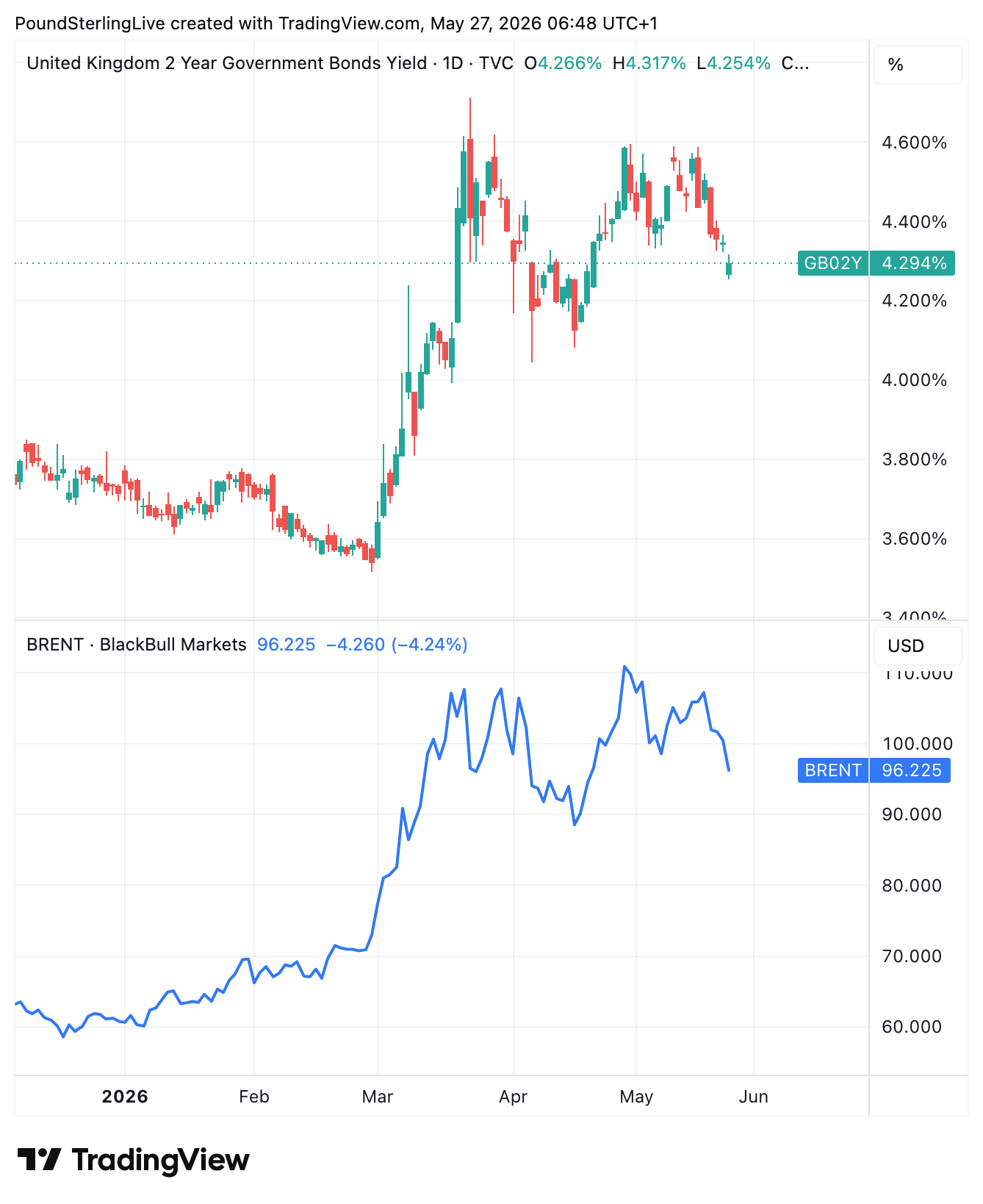
Above: GBP two-year yields and oil prices (lower panel).
Economists agree that should the Strait reopen shortly, the Bank of England is likely to avoid raising interest rates owing to the frail state of the local labour market.
"As long as there are some signs of the Strait of Hormuz reopening by the time of the June meeting, we think the BoE would remain on hold then. If the BoE can forecast a decline in energy inflation in the July MPR, we think they would remain on hold throughout 2026," says Bruna Skarica, an economist at Morgan Stanley.
As interest rate expectations fall, so too does the pound, confirming this is the primary driver of pound sterling at the current time and implies further falls in bond yields would likely weigh on the currency.
"We consider GBP can correct lower because we expect the BoE will hike by only 25bp because the weak labour market will prevent much pass‑through of higher oil prices to core inflation," says Capurso.
Despite hopes for the Strait to be reopened, any peace deal would likely lead only to a gradual reopening, meaning the current tight gas and oil supply outlook could take months to normalise.
That should limit the decline in energy prices and underpin inflationary pressures, ensuring bond yields don't return to pre-war levels.
That should offer the pound some support and limit weakness.