
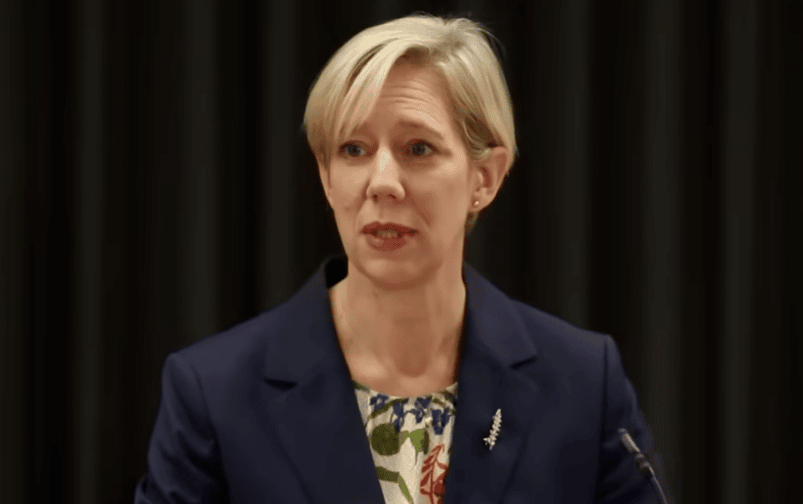
File image of Anna Breman. Copyright: Pound Sterling Live.
The RBNZ won't be in a rush to raise rates in response to the Iran conflict.
The New Zealand dollar has lost further ground against the pound, euro and dollar as markets see a 'less hawkish' path for domestic interest rates.
Reserve Bank of New Zealand (RBNZ) Governor Anna Breman said the central bank will look through "a short-lived disruption and a temporary increase in petrol prices."
This signalled there is no reason to expect any shift higher in New Zealand's interest rate path and money market pricing shows investors have reduced the expected chances of RBNZ rate hikes later this year.
"NZD/USD is trading on the defensive under its 200-day moving average (0.5864). RBNZ Governor Anna Breman discussed the impact of the Iran conflict on New Zealand," says Elias Haddad, Global Head of Markets Strategy at Brown Brothers Harriman.
The pound-New Zealand dollar rate looks to record its sixth consecutive daily advance, rising to 2.2973, and euro-New Zealand dollar rises to 1.9871.
The NZ Dollar started 2026 in strong fashion as the RBNZ appeared to be ahead of the pack when it came to raising rates.
Fast-forward to March, and the Iran war means central banks across the world must now consider raising rates in response to signs of a looming pulse of inflation. Today's Eurozone and UK PMI data showed significant inflationary pressures building in Europe that would likely require central banks to hike interest rates.
That diminishes the rate advantage the NZD had enjoyed over its peers in January and February.
Speaking on Tuesday, Breman said "we are likely to see higher headline inflation over the near term, and somewhat weaker growth momentum."
But, the RBNZ "will not respond to a short-term jump in inflation due to higher fuel prices, especially given that the central bank now sees that growth will be weaker than it expected in its February MPS due to the crisis," says David Forrester, FX Strategist at Crédit Agricole.
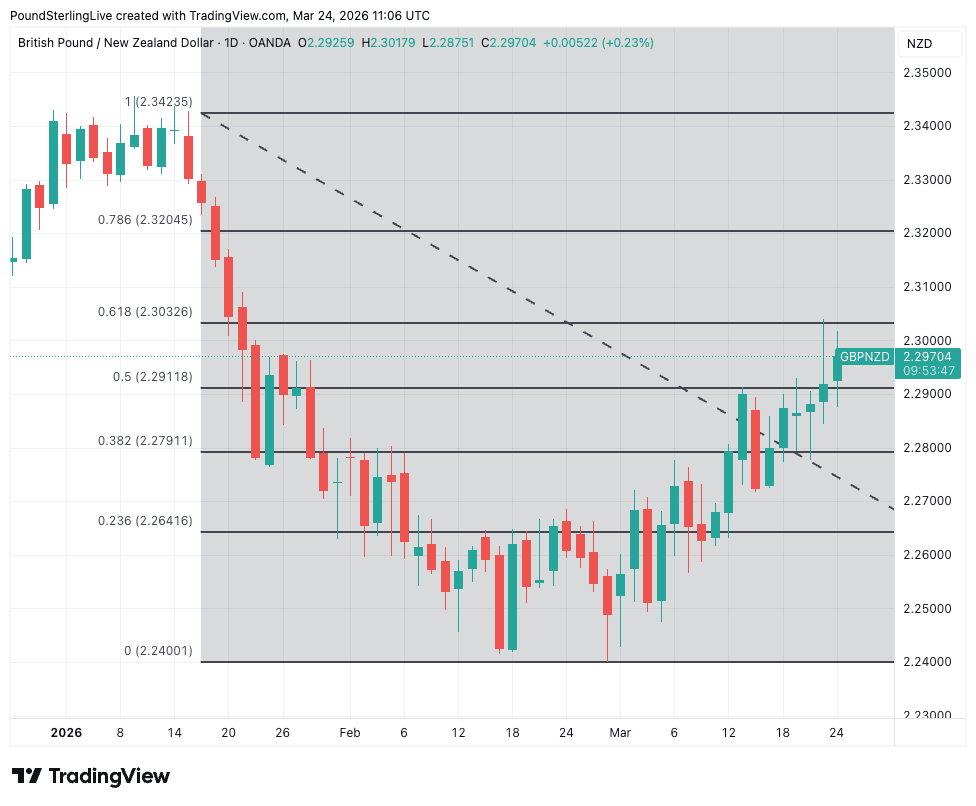
Above: GBP/NZD daily chart showing the Fibonacci retracement zones of the 2026 drop.
Breman says New Zealand's economic growth is being weakened by higher business costs and falling profit margins, weaker household real incomes and a potential decline in tourism due to higher airfares.
"So, rate cuts on the back of a weaker growth outlook are not being considered by the central bank," says Forrester.
The RBNZ governor is cautious that raising interest rates won't do much to deal with the effects of inflation being generated outside New Zealand's borders, and would actually make things worse for the economy.
However, she warned the central bank might have little choice to raise rates if a drawn out Middle East conflict triggered second-round inflationary effects. That's where higher energy and food prices prompt other businesses to raise prices, thereby triggering a snowball effect.
GBP/NZD now targets a move to 2.30, the 61.8% Fibbonaci retracement of the 2026 decline.